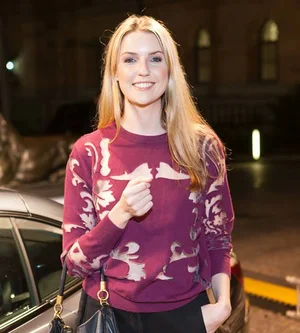
#awinewith Stephanie Bofinger
MEET Stephanie Bofinger, Founder of Fempro Armour
You can find them here:
Transcript
Danielle Lewis (00:00):
You are listening to Spark TV where we bring you daily interviews with real women in business at all stages. I'm your host, Danielle Lewis, and I am so grateful to have you here. Steph, welcome to Spark tv. It's so good to have you here.
Stephanie Bofinger (00:17):
Thank you, Danielle. Really nice to be here. So thanks for having me. Yep.
Danielle Lewis (00:21):
Oh my god, we've already just been chatting, so I already know this is going to be a good one. Let's start out by telling everybody who you are and what you do.
Stephanie Bofinger (00:32):
So my name is Stephanie Inger. I'm the CEO and founder of Fem Proma, and we do a female shock absorbing smart armor for injury prevention in impact sports such as A-F-L-N-R-L, rugby motorcycling. But we're also supply into the defense force and we go into the healthcare to prevent head of female fractures in our moms and dads, our elderly parents.
Danielle Lewis (01:00):
Holy crap. This is why that was my 92nd elevator speech. I love it. This is so good. How the hell did you get into this? This is amazing.
Stephanie Bofinger (01:12):
Well, I was, for 20 years in the beauty industry, I had a beauty salon slash days bar. Later on in Brisbane and end of 2019, I rode my dirt bikes through the Simpson Desert to raise funds for Dolly Dream, which is an anti bullying charity where Dolly, she committed suicide due to cyber bullying. And we were 13 girls and I rode into the desert owning a day spam and I came out of the desert deciding I need to change how women are protected when they are doing stuff like what I did that are pretty dangerous in itself because we women have to wear protective gear that is designed for the male shape that might be either then classed as unisex or they are just shrinking it and pinking it and then they're classing it as a female protective gear. But in essence it's still the same.
(02:14):
And so here I thought I'm going to change the world. I'm going to bring out female body armor for motocross. So I launched in December, 2020. Oh my God. And in February, good on you. Yeah. February, 2021, I then relaunched into fem pro armor because I realized that the problem was not just in Mocos, it was pretty much where females can go. It was in horse riding, obviously motorcycling, martial arts, boxing, workplace security, police defense. And then I had two family members fall and my grandma broke her hip. She died four days later due to complications. And then my mom fell as well, broke her hip too. And then I said, okay, enough, I'm going to create body armor for the elderly to prevent fall, prevent the impact of a fall because we can't stop them falling, but we can stop off what happens after that. Because statistically it shows that a large majority of people that have fallen and broken their head of femur will die within 12 to 18 months. And it's actually not the break in itself, but it's the stuff that it's around it because they lose their independence then they're not active, then they can't breathe properly. And then just one thing starts that spiral of going downhill. And I have seen it with my mom. She's 77, but she's more like 85
(04:03):
And there are so many things that she can't do anymore, which is terrible to go through. So that's how it all came together. And sometimes I'm cursing the Simpson Desert because life was so much easier prior to this. However, I love every minute of it because I'm we people that have bought our gear, if it is apparent or the athlete in itself or a motorcyclist. And when they send us a message and go, like we had, for example, I had a lady call me six weeks after she bought our gear and she said, Steph, I need some new jerseys. And I'm going like, okay, no problem, but may I ask why you only just bought it? And she said, well, I came off my motorcycle at a hundred k an hour on the M1 in New South Wales and she slid on the chest for about a hundred meters. And so when she showed me the pictures, and she was someone that never wore any protective gear prior because of the stuff is so uncomfortable and not fitting, and if she didn't have anything, she would not have any nipples left. Let's put it this way. Wow. Yeah. And so she became my poster girl as such.
Danielle Lewis (05:33):
I love that. Horrific. But yes.
Stephanie Bofinger (05:37):
Yeah, and a picture of her on our Facebook page is she's got a beer biggest smile on her face. She looks like she had an attack of a zombie, like a zombie was just going after her, but she smiled thumbs up. And that's what we're here for is when you do get into something like that is you are protected as best as possible. And we are not saying that you can't get injured, but when the injury do happen, there are significantly less so that you recover faster, you don't have, or the likelihood of long-term problems is significantly reduced. And it gives people the confidence to do things that they thought they could not do. And when we talk about grassroots sports like NRL rugby or a FL, a lot of the parents are holding their girls back because they're obviously worried about them getting hurt, particular when they have to play with boys because women do get injured way much quicker than men or boys and girls. So that hearing that girls have more opportunities because parents feel so much safer when they know that their kids are protected, it's a pretty cool feeling.
Danielle Lewis (07:07):
That is absolutely incredible. I am so impressed. So tell me then, this means, so you have a physical product, this means that you would've had to have done all of your research prototyping, manufacture in 2020, which tells me that was COVID times. What was that like?
Stephanie Bofinger (07:30):
COVID was, to be quite honest, the best thing that ever happened to me because obviously being in the health industry, I had to shut down my business because before COVID when we did research, so I worked a full-time job and then I had to do all my research at night. So for the first year I slept on an average three to four hours. I was an adrenaline junkie.
(07:59):
I had no idea until my very first holiday in 2021 of how much adrenaline I had in my body because when we actually went away, I completely broke down. I just slept. It was just incredible. I've never slept in my life that much. Anyway, so COVID came and I had all this time obviously I had no money because nothing came in, but I had time. So I just went on this. I mean I had at the time three computer screens and I had so many tabs open, I could not even, I would close accidentally tabs because there was so little, it was so tiny. I shoulda had this massive TV screen where I could have had multiple pages happening.
(08:57):
And to be quite honest, through the research, this maze was just like a monster. And to be quite honest, I really can't tell you how I got to the final part because there was no straight line or it was just like a spaghetti bowl. There was no clear vision until I found this one video where these two guys, one was hitting the other with a frying pan and the other one with a cricket bat. And I'm going like, Ooh, this sounds interesting. And then that went even further down. And obviously through the first 12 months of research I approached about 15 manufacturers and they all told me that what I wanted was impossible to do. Now call me a stubborn German, but just because we don't know how to do it doesn't mean there is no way to do it. It's just how bad do you want it?
(10:05):
And for me, I've taken the existing product and going like, okay, what is working in that and what is not working? So I then redesigned the parts that did not work. So excuse me. It was quite fun because obviously as you can imagine, females have different shapes, not just in body shape but also in breast shape. There are further apart, they are higher, lower hanging teardrop. I've never played with so many boobs in my life before. What a happy little accident. So good. My husband back then boyfriend at the time, he said, can I do this? I think I found my role in this company. I know because we took plaster casts of those different shapes
(10:57):
Because we had to work out how many do we need to do in order to fit everyone in it. And so through that particular video where they hit each other with that frying pan and bat, I then found my manufacturer. And when I approached them, I approached them just like any other one. And funny enough, they're only 15 minutes away from my hometown in Germany. Oh my god, this is awesome. Which I didn't know. And so my email to them said, okay, could I have a conversation? I still speak German, I like to see people when I interact with them. And the email came back, they said, we don't do any Zoom calls, but send us your staff. And then we go from there and I'm going, okay, but before I do, can you please sign my NDA and then I will send my stuff over. So I did send the stuff over. The next email came from the business owner and said, oh, we would like to zoom with you and I
Danielle Lewis (12:12):
Oh,
Stephanie Bofinger (12:13):
So you make exceptions for good
Danielle Lewis (12:14):
Ideas. Excellent. Yes, exactly.
Stephanie Bofinger (12:19):
So we obviously had this conversation and on the end of it he said, Stephanie, I have no idea how we do this, but we find a way.
Danielle Lewis (12:28):
Wow. Oh my god. That must have been the best thing that you heard in this entire process.
Stephanie Bofinger (12:36):
Oh, it was just incredible because particularly in motorcycling, when you want to sell overseas, you have to have European impact certification. Now when you look at traditional als, everything is flat now, but when you bring in a curve like the breast shape, the impact certification is scaled up at let's say impact certification here on a round shape. It's like up there. So it's definitely much harder to do. But 12 months and four days later after that conversation, I had my very first body armor.
Danielle Lewis (13:14):
Oh my God, that's incredible. Have you been over since to meet them?
Stephanie Bofinger (13:20):
No.
Danielle Lewis (13:23):
I thought you would've gotten a little trip back home and
Stephanie Bofinger (13:27):
No, I mean I've been here now, hang on 37 years and I've only been back once. Oh my gosh, wow. And that was 10 years ago. But I am going back to Germany in December. I'm the biggest European expo in December and then I go and see them. Yeah, it is amazing. And they've been through everything and they are dreading when I come up with new ideas, it's never simple.
Danielle Lewis (14:03):
That's so good. So you mentioned an expo. So you sell and because you do government contracts, so what does your business model look like? Do you do e-commerce, wholesale contracts? What's that ecosystem look like? So
Stephanie Bofinger (14:17):
We don't have any contracts into the defense force. We supply the back part of a ballistic plate. So our body armor goes behind a ballistic plate that was designed over hours because for five years they tried to get the breast shape and they're going like, we don't get it. Can you help us? And I'm going like, you guys should know how to do this. You play with boobs so much more than we do. And so they've used our product to design the outer shell. So with them, we supply our gear to them. And then because of license issues, when it comes to ballistic, there's a lot of protocols involved. Who's going to be responsible if something fails?
(15:09):
So the ballistic plate takes, obviously the bullet hours will take the kinesthetic force of the bullet and it'll make it also more comfortable. So with them, we have an internal contract, otherwise we sell through our website and we go in wholesale to various stockists that we have. We are obviously still a startup, so we are sort of creeping slowly towards that because you don't want to have anyone stocking it because our product is not very well known. So it's not like let's say Fox or Alpine Star that is very into the motorcycling, car racing and stuff like that. People know about it. So when they need something, they're going to a shop and they ask for it. Where we fem prama, the stockers still has to promote us, so they still have to talk about it. So for me, I'd rather have less stockers, but they actually help us promote and grow. Instead a stocker that keeps your product just on the shelf and it's waiting for it to walk out by itself because we're not at that stage yet.
Danielle Lewis (16:29):
That's awesome. And it is actually great advice for people. I think sometimes when you are going down the wholesale path, you just think the more the better, but you're so right. That person, I remember even Sarah Blakely who founded Spanx, she talks about that she's like in the early days, so she'd have stockers, but she would go into the department store and just stand there and tell people what it does because she's like, no one got it. The sales assistant didn't know what they were or what they do. And then obviously that went on to be very billion dollar company. So I feel like you're on the way.
Stephanie Bofinger (17:07):
The problem I find with stockers is because they don't train staff properly,
(17:14):
And I have canceled on two stockists. One wasn't Canada where he wasn't paying in the ass seriously. And I was thinking if this is the first two, three months and I wanted, so being German, we like paperwork, we like contracts. I don't do gray. I'm very black and white and I like to have things spelled out so that communication is open and no mistakes are being made. And if I have a and you sign it, you know exactly what you can expect from me. But you also know what I'm expecting from you. Now if you sign it, then for me that shows you have read it. And if you haven't, well that's not my problem, but I will hold you accountable to this. So for me is I wanted him to sign our wholesale agreement so that we know exactly what he's going to do and what he can expect from us in assistance, et cetera.
(18:25):
And he goes like, well, I don't do that. And I'm going like, that's okay. I'm not going to force you, but that's not going to keep going from us and we'll just say no to you. And then, oh, I didn't mean this. And so he backpedaled and I'm going, it's already gone done eat. You sure I needed him in a way at that point? Most definitely. But if you are already like that at the start, how is it going to be 12 months down the track? And I'm going not interested. And just recently I had a conversation with a stockist where she, I'm going like, okay, your last order was in 2022, do you still want to be a stockist of ours? And she Oh yeah, yeah. And I'm going like, well, you are obviously not promoting or doing new bits and I haven't seen any social medias et cetera.
(19:26):
What do you need from us? And all that kind of stuff. And then she said, oh, we are promoting you. And I'm going like, okay, so how come when I rang last week, the assistant who answered the phone didn't even know I was fan proma was. And I'm going like, well, if your salesperson doesn't know what we are, then I can assume you're not promoting because, so it is a very tough thing to have a particular, I hate the word you are a niche because we are not a niche. I mean we are females, the population has more females than males, however we are like Billabong, when they started in the eighties, there was nothing for females and suddenly there's a different approach to it than if you have already underwear out there and you're bringing in different kind of underwear, but it is still in the same underwear. People, yeah, it's not an unfamiliar part to it to sell as such, but when there is something completely new and we're talking about boobs and women and for some reason it's such a big problem for guys particular. So yeah, it's funny.
Danielle Lewis (20:46):
Oh my God, I love that. I love that. So how are you going about marketing? So if you are in that phase of got to tell the world about what's going on both for your e-commerce but for wholesalers and potential partners, what are you currently doing for marketing that's working,
Stephanie Bofinger (21:07):
Look working? It's debatable as such. We're still trying to figure out what will work and doesn't our gears a lot by word of mouth to be quite honest. And so for example, motorcycling, I mean a lot of motorcycle pages because I'm a motorcycle rider obviously. So when people are asking then people are actually saying have a look at from Prime, I have that. So we see now that there's a hell of a lot of that happening. Yes, I'm putting posts out and I always don't like saying try when we do is making it more of what the benefits to them are than what the product is about. Because to be quite honest, no one cares about what the product is. They care about what does this product give me when I'm wearing it? So making that for us, it's our new product with the A FL and rugby. I actually partner up with clubs and the clubs are actually doing the work for me because that's super cool. Instead having a stockers where I have to give a certain percentage, I give the clubs because clubs struggle making money.
(22:38):
So if they are referring us to a new club and that club brings us a sale in, then the referral club will get a percentage, which is obviously less than a stockist. So I save, they make money, I'm getting into another club. So in it just multiplies so through contracts and then I just ask who can we help? And our customers love sharing. I mean I just recently had a customer who went to his school, which is the most expensive private boys school in the Sunshine Coast, and so he's gone like, Hey, this is what my son is wearing. Have a look at that. So the school became interested and so it's more that kind of a stuff is working for us than actually posts. We have a great ambassador program, so it's actually our customers that refer, they make some money as well because whilst I'm very grateful when they're doing it for free, but I feel a bit odd on that because it makes me feel like it's just me.
(23:55):
It's just, and to be quite honest, when we exit our business, I want to have the biggest as party on this planet and this party can only happen when we have people in our team and our ambassadors, our shareholders, our custom normal customers. They all need to come, particularly the ones that bought our gear when it was really bad, and I'm saying it because I'm looking at our apparels when we started and I'm cringing. I'm going like, how can anyone buy this? Because the quality back then to what it is, it's like, it's like a different dimension,
(24:44):
But they were the ones that believed in us because when you sell your first product, if it's good, they will show it to someone else and then one becomes two and then two becomes full. And it's taking a long time to get that momentum. But it's great. I mean I go riding sometimes and someone is riding past me that wears my gear. When that actually happened, first time I went like, oh my god, and I went on this group ride with my husband and some other people and there were two girls that wore our gear. Now they didn't know that we were the ones making that now. They didn't buy it from us, so they bought it from someone else, obviously through a stockers.
Speaker 3 (25:37):
So
Stephanie Bofinger (25:37):
It was just, I'm going, it was the best ride ever because we then became really good friends, but it was people like theirs because they are ambassadors and they're not wanting anything. They just love to share it. And that's where our success comes in selling pretty much.
Danielle Lewis (26:03):
Wow. That is absolutely incredible. And I mean it's interesting. I think that you are right, that word of mouth approach, especially in the beginning is slow, but it's just the best kind of marketing. If somebody other than a brand is saying, this is awesome, this is what I use. There is no better marketing than that right there. But I do love the approach of giving them a cut, taking them on the journey and rewarding them for that referral. I think that's smart and I love that there is going to be an epic exit party with all of these amazing supporters. What's your strategy? What's your timeline? What do you want to do? What's the exit plan?
Stephanie Bofinger (26:48):
Well, exit plan will be 30, 32 when the Olympic, so either in 2032 or 2033. I always say it wrong way. Hang on. 2033. Yes, 2033.
Danielle Lewis (27:04):
It's way too far to think of. So what's that? That's eight years. Eight years, seven. Okay, cool. Seven, eight years. Thank you for doing that math for me. I was looking at 2025 going, I can't even deal with this.
Stephanie Bofinger (27:19):
It's the reason why we chose that because anything and everything that we do now is tailored towards equipping a few disciplines in the Olympics. Now obviously if we exit beforehand, awesome, but having our gear present at the Olympics as the supplier, for example, into rugby, also into martial arts, et cetera, and then new sports that will come up, it'll make the paycheck just a few more zeros for us. I'm then 60, hang on, I'm 62, 63, then
(28:03):
It's time for me to leave. If I do, that's the different question. But when I had my days spa, it was created very much around me and it was a job where Femara armor from day one was set up so that it's not me. So I literally could leave and someone picks up our manual and then continues operating Femara armor. And so for me it was very much the lessons that I've learned owning a day spa and how I set that up made me realize I need to change that so that I don't fall into the same trap. So because for me, as much as I love Fama and it's my baby, but it's the same with my children. I love them dearly, but I wanted them to go out. I wanted to exit, get out where I love this baby, but I want to exit, get out.
Danielle Lewis (29:09):
There is a margarita on a beach somewhere in a decade.
Stephanie Bofinger (29:15):
No, I'd rather be underwater scuba diving or somewhere in a forest. There you go.
Danielle Lewis (29:22):
Our exit strategies are a little different. Oh my god, I love it so much. I could talk to you forever, but I always love to wrap up these podcasts with one last piece of advice. So reflecting on your time in business, what would be a piece of advice that you would give to another woman on business journey?
Stephanie Bofinger (29:43):
Can I put two into one?
Danielle Lewis (29:45):
Yeah, do it. You can do it. There are no rules. You go
Stephanie Bofinger (29:48):
For it. There are no rules. Well, for me is not taking a no as the answer because if I did, I would not have my very first product. However, my attitude is I don't have a plan B, I truly believe a plan B is a cop out. It's that safety net. If it's not working, I have invested every single thing that I have into this company, all our super, we've sold pretty much everything. If this fails and it's not failing, that's why I said if, because normally I don't have that. If in my vocabulary it's failing because of my wrongdoing, not because of our product. So for me, having no plan B means I am more than a hundred percent into this business because I cannot afford failing failure. It's not failure as such because there's always lessons to learn. However, it's not just me anymore.
(31:04):
We have shareholders in the company, so I owe them. I want to sleep at night and for me is I want to be able to close my eyes at night and have on my conscience the attitude that I have tried everything that I can possibly do today. And I will do this every day so that whoever invested in us, if it was $500 or a thousand dollars or $200,000, whatever the amount was that they will get the return back. It's not just any more failure for me, it's failure on a bigger scale to those people. And I could not forgive myself that someone else lost. I'm okay with losing money on my own if I fucked up, excuse my language, stuffed up. So you need to edit that. Nah, I'm really sorry. It's a free for all here. It's all good.
(32:06):
So it's not having a plan B and not saying or taking a no as the ultimate. When someone says no to me, I'm going like, that's okay. Do you mind if I come back at some stage we could have another conversation or when I talk to someone, I always say, I don't know if this is for you, but at least if you had a look at it, you know what is on the market. So when you are ready, you already know about us. So it takes the pressure off. So for me it is no plan B and don't take no for the answer.
Danielle Lewis (32:43):
Oh my God. Steph, you are absolutely incredible. I am so impressed. Thank you so much for sharing your story and your journey and your advice with the Spark community. So grateful to have you on the show.
Stephanie Bofinger (32:57):
Well, thank you so much. I really appreciate it and thanks for having me in your community. I've only joined last week and so I'm a very newbie to it and I wanted to be in your community. I've seen it last year and I wasn't ready and I always thought there's so much to learn, even if you know about it, just going back over it. So thanks for having me in your community. Loved my first workshop today was great. The IP stuff. So looking forward to, I've signed for all of the workshops up so it automatically comes so I'm not missing anything. And just learn from others and be surrounded by a great community so you're not alone.
Danielle Lewis (33:43):
Oh my God, I love you so much. No, my spark is absolutely incredible for that. And we are honored to have you in the community, so I can't wait to learn more about the business and support you where we can. I think that you are just going to do amazing things. It's absolutely incredible.
Stephanie Bofinger (34:00):
Thank you so much. I really appreciate it. And have a good night.
Danielle Lewis (34:04):
That wraps another episode of Spark tv. Shout out to Spark TV sponsor IP Australia for their amazing support of the Spark Podcast and women in business. And if no one tells you today you've got this.
✨ Thank you to IP Australia for supporting the SPARK podcast and women in business ✨