✨ Thank you to IP Australia for supporting the SPARK podcast and women in business ✨
Hotels benchmark their room prices obsessively. So why does nobody on earth benchmark meeting and event spaces? That question became Emekeli Research, the business Yona Heyward co-founded with her husband and business partner Michael. In this episode, Yona traces the winding road from early years teacher to hospitality trainer to research founder, and delivers some of the most quietly profound business wisdom SPARKTV has heard: on small acts of courage, knowing your limitations, hiring for fit, and why your energy is the asset that everything else depends on.
How do you find a business idea in a void?
After years in the UK running hospitality training through the Heyward Group, Yona and Michael returned to Australia and hit the classic expat wall: no local network, established competitors everywhere, "swimming in a red sea." Then they noticed something. Hotels benchmark their room rates rigorously to know if they're pricing correctly, but for meeting and event spaces? "There were no standardised metrics anywhere in the world. No articles about it. It's just a void." They gathered a group of Melbourne hotels and asked: is this a problem? Would you like to know whether you're leaving money on the table? The answer was yes, and with Michael's deep revenue management background, Emekeli Research was born.
What are small acts of courage?
Yona's whole philosophy in one idea: "I'm not talking about large acts of courage. I'm talking about picking up the phone and talking with somebody. It's those small acts of courage that lead to the next one, and then the next one." That's how a self-described tech dinosaur ended up building an AI-era research platform: not by learning to code, but by having the courage to say "that's not my skill set, who can I find?", which is how tech partners Systema joined the adventure. Courage takes energy, she warns, and it needs self-awareness: know your strengths, know your limitations, and know which ones to push and which ones to navigate around.
Why does self-awareness beat talent?
Yona is a devotee of Harrison Assessments, behavioural profiling that showed her both her strengths and her blind spots, and she applies the same lens to teams: structuring workflow around people's actual strengths, and spotting when a team is all alike and missing perspectives. Her hiring principle: find "not the best person for the job, but the best fit for the team and organisation", including purpose alignment, because misaligned hires look like they're on your road until, much later, you discover they were on a different one entirely. And her leadership image is a keeper: get off the dance floor and onto the balcony, because in the middle of the dancing, you can't see the flows, the ebbs, or the one person doing ballet while everyone else does hip-hop.
What does it cost to avoid the tough decision?
Yona doesn't theorise about tough calls, she's lived one: parting ways with someone whose impact the business was still untangling six months later. "Here is where the big courage comes in. If we kept backing the person who wasn't achieving, that would have been the end of our company." Her counsel for the hardest moments: gather your knowledge, get qualified advice (an HR consultancy, in their case, who knew "all the laws of the land" and drafted every communication), protect yourself, and have a plan, because walking into a hard conversation prepared is what lets you do it with confidence, and do it right for both sides.
Yona's one piece of advice for women in business
"Look after your energy. Being courageous takes your energy. Carrying a team takes energy. Doing things we're not good at takes energy." Her prescription: take real time out, to reflect, to break completely, to sit in a conference and just listen, because that's when things swirl in the back of your mind and suddenly click into place. "If you're working 14 hours a day, your brain doesn't get time to stop, and over the long term it impacts your energy reserves. And you need your energy reserves."
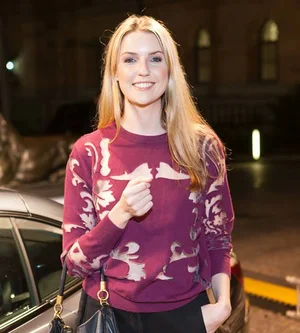
Meet Yona Heyward, Co-Founder of Emekeli Research
Yona Heyward is the co-founder of Emekeli Research, which is building the world's first standardised benchmarking for hotel meeting and event spaces, alongside her husband and business partner Michael. A former early years teacher turned hospitality trainer specialising in the humanistic skills ("we don't call them soft skills, they're harder than the hard skills"), she brings decades of insight into teams, leadership and the courage it takes to keep stepping outside your comfort zone.
You can find her here:
Full transcript
Danielle: Amazing! Yona, welcome to Spark TV!
Yona: It is great to be here. Thank you for inviting me.
Danielle: Oh my god, so excited. I have spoken to you several times on our members' calls, but sometimes you don't get to dive as deep as you'd like to, so I'm very excited to share your story today.
Yona: I'm actually looking forward to sharing the story, because I know there are a number of people who, just like me, do not know where to start, or what to do, or think, am I good enough, all of those kinds of things. So it's really lovely to share.
Danielle: Oh, I can't wait to get into it. Let's start out by telling everybody who you are and what you do.
Yona: So, my name is Yona Heyward. I work with my partner in life and in business, Michael Heyward. I started off life just wandering around, not knowing where I fitted, trying a number of different things. But I really got into education and teaching, as an early years teacher. Being in that role, though, there's one thing about believing in what best practice is, and then actually experiencing the control from government and from different places, and not being able to be the teacher you wish to be. So my husband said, why don't you come and work with me? He had started his own business, and so I trotted along and did that. And discovered that, actually, he wasn't helping me out, I was helping him out! He'd come along and say, here's a job, this is what to do, assume I knew how to do it, and leg it!
Danielle: They're good, aren't they?!
Yona: So I joined the Heyward Group. We were living in the UK at the time. And talk about living outside your comfort zone: it wasn't my world. They did hospitality, particularly working in hotels, that's Michael's background, whereas I come from education. I really felt like I didn't walk the walk, I didn't talk the talk. How did I fit in here, completely outside my comfort zone? But we developed a lot of training for hotels, particularly looking at the humanistic side, things we often call soft skills. And we don't like calling them soft skills, because they're harder than the hard skills! And this is where my talents came into it, because I'd been working with families, working with children who can't express themselves, who don't have the words to describe what they're going through, and it's the same with the humanistic skills. We often learn them on the job, but that depends on who your supervisor is, how much time they have. And nowadays, we're on this productivity drive that leaves no time for training or considering. So it was going in and observing how teams work, and recognising the individual components within a team that either drive it to be dysfunctional, or drive it to be effective. I found my observation skills and my people skills really benefited in that area.
Then a couple of years ago, we moved back to Australia, for family reasons. Like many people I know who used to work overseas, everybody's heading back home again. But that transition is not as easy as it seems, because people here are used to working with people here. If you don't have the contacts, trying to do what you did overseas… there are a lot of established people here. You're swimming in a red sea, really. Lots of competition. But what we discovered was that hotels benchmark their rooms, to know whether they're setting their prices correctly. And none of that was happening for meeting and event spaces.
Danielle: Mmm, wow.
Yona: So we did a survey, and got a group of hotels together in Melbourne to ask: is this a problem? Would you like benchmarking, to know whether you're leaving money on the table, or whether you're driving your business correctly? And what we discovered was there were no standardised metrics anywhere in the world. There are no articles about it. It's just a void.
Danielle: And yet, to be able to drive profits…
Yona: If you want to improve, you can't without some kind of measurement. So the group said: yes, we can agree on standardised metrics, and yes, we do want such a product, to benchmark ourselves against the market. And so we took the plunge. And because Michael's so high up in revenue management, we decided to do it. We developed Emekeli Research, which is our latest project.
Danielle: Oh my god, that is incredible, and there are so many things to unpack there. I just love your vulnerability and openness in sharing that it's not a linear journey. You don't just wake up and say, you know what, I want to be a successful business owner, and here's my idea. Often it's just as much a journey of self-discovery as it is figuring business out.
Yona: Yeah. It's also knowing: what is an opportunity? And being in the place, ready to take advantage of that opportunity. Often what happens is we don't recognise something as an opportunity, and we're also not ready for it. So much of this is about timing.
Danielle: You are spot on. And sometimes I think people are sitting back waiting for opportunities, when it's actually in the doing, taking action and putting yourself out there, that they tend to come. And I love that you talked about being totally outside your comfort zone, because I feel like I've been outside my comfort zone for the last 20 years! You do have to go out on that limb, put yourself out there, put your idea out there, let the opportunities come. It's a chicken-and-egg scenario: you've got to do the things, and then also recognise the opportunities when they come, and jump on them.
Yona: That's right. I also think there's an element of courage needed. Many of us often want a simple life…
Danielle: Yes, tell me about it!
Yona: …and it's really lovely. But it takes a lot of energy to be courageous, to take that step. And I'm not talking about large acts of courage. I'm talking about picking up the phone and talking with somebody. That takes courage. You need to think about what you're doing and how you're doing it, but it's those small acts of courage that lead to the next one, and then lead to the next one. And that's what's really important. You need to gauge and think about what you're doing, you need to understand where your limitations are. Living outside your comfort zone and doing new things all the time, like you said, it's taken you 20 years, I've been at it for about 7, it takes energy, and you really do need to be self-aware: of where your strengths are, what your abilities are, and also your limitations, where you need to ask for help. All of those are important when you take acts of courage. But start out small. Build them up little bit by little bit. You never know where the road takes you. We didn't know we would go down this Emekeli road. I've had to learn about tech like nobody's business. I'm quite happy to say I'm a dinosaur, and tech at the moment is moving so fast, AI, building agents or assistants, the little bots to help you move forward. When I was first told about this, my jaw just dropped, and I went: I am so far behind, I don't know where to go. But it's not being afraid of it. It's saying, that's not my skill set. Who can I find to come on board and join us? And we are so fortunate: Systema are our tech guys, building everything and handling security, and we wouldn't be here without them. We wouldn't be able to do this adventure. But I had to be courageous, and pick up the phone, and find such a partner. That takes time and effort. But I knew we would not be able to go anywhere without doing it. It's those small acts of courage that allow you to move on.
Danielle: I love that so much. And it reminds me, we've been in the last couple of Spark members' virtual coffee sessions together, and two sessions ago you were talking about an AI workshop you were going to, and in our last session you very generously shared your learnings. Isn't it interesting how learning never ends? You say you're a dinosaur, but I feel like we're all dinosaurs at the rate technology is moving. You can't keep up unless you're willing to learn, whether in a workshop, a course, or from each other, which is one thing I love about Spark.
Yona: I think understanding ourselves, being self-aware… I often talk about understanding our limitations. We would often say "weaknesses". Well, everybody's good at something, and everybody's not good at some things. Understanding our limitations allows us to either find ways around them, like finding a partner, asking for help, or to go off and learn, and practice those skills. Because often we put something aside and say, no, no, no, that's not for me…
Danielle: Future me problem!
Yona: …but you cannot get better at something by not doing it. You need to find ways of pushing your limitations. That takes practice, energy, commitment. But once you know your limitations, and how far you can push them back, or where to find assistance to go around them, they don't become barriers. They're just an understanding of what you can do, what you can't do, and how to navigate around it.
Danielle: Yeah, and I love that you talk about this, because it's true at any age and any stage of business. It doesn't matter if you're 20 and born with an iPhone in your hand, technology will still move at a rate of knots, and you need a commitment to lifelong learning. And if it's true for the 20-year-old, it's true for the 40-year-old, the 60-year-old, the 80-year-old. Which means it's never too late. If you have a dream and you feel like you're behind, who cares? It's never too late to learn something new and evolve.
Yona: Absolutely. I learned this when we did Harrison Assessments, a behavioural profiling that not many people know about. I was in a big, deep hole at the time, and Michael was learning how to run it, so I was his guinea pig, going through the debriefing, the questionnaires, the reports. And what amazed me is how it shows us our blind sides, and it shows us our strengths. The positivity is great, but it also allows you to say: in this area, I can develop further. The number of times I keep coming back to the Harrison reports, having things on paper to work through. You can take teams and look at the workflow and the structure according to people's strengths, all the capabilities for building a team up. Or you can say: you've got a hole here, you've built this team and they're all alike, but you need different points of view, different skill sets, to give a holistic service to your customers or reach whatever goal you're going for. Understanding how those individuals knit together to make a great team is really important, and I find Harrison Assessments really helpful for that, for the individual as well as for the cohesion of a team.
Danielle: Yeah, it is really interesting. I remember building my first team in my first business. It was my first real management position, before that I was a salesperson, and as a salesperson you're a lone wolf, the harder you work, the better you do. And when I built that team, I just hired everyone that was like myself, people you like hanging out with. It didn't work out well for me! But I think sometimes as business owners we feel a bit of shame around not being able to do everything, and I love that you've brought this up, because that's just life. We all have our strengths and weaknesses, and the more you figure out yours, the better you can fill the gaps in your team.
Yona: It's like getting a 2IC and saying: right, you cover the things I'm not good at, and I'll cover the things you're not good at, and you knit together into a little team. But you have to be self-aware of your limitations and your strengths. The self-awareness is so important, and it keeps coming up in different frameworks, radical collaboration, the five dysfunctions of a team, it keeps coming up. And I think there's a really great point about being a leader here. We have this view in our heads that the leader leads, and everybody rests upon them. That's not what a leader is. A leader is somebody who understands the team underneath them, the goals, and how to get somewhere. They provide the clarity for others to work, and then you rely on the strength of the team to actually get you there. You're much more of a guide. There's a great analogy, from a book whose name I can't remember: so many people say, "I'm hands-on", but think about a dance floor. If you're in the middle of the dance floor, you cannot see the flows and the ebbs that are happening. You see the person working beside you, but you don't see the effects of their actions across the rest of the team. As a leader, you need to be up on the balcony, looking down, seeing where the flows are going, how things are moving, the impact of particular behaviours down on the dance floor. If one person's doing ballet and another is doing hip-hop, it's really hard to get those two working smoothly together for the outcome you want. Understanding our capabilities, and the areas where we're not good, as a leader, is really important for building teams.
Danielle: Mmm, I love that so much. And it's true whether it's a large team or a small one. If you're listening as a solo business owner about to bring on your first person, contractor or full-timer, thinking about this from the start is so important.
Yona: We often think: do they have the qualifications? Do they have the experience? But we also need to know: does that person fit into the team? Is it a team that needs to be shaken up, and you're bringing in somebody strong who can do that? Or are they filling a gap the team needs? And can they work with you? What's your profile against theirs? These decisions are fundamental: finding not the best person for the job, but the best fit for the team and organisation. Because then you're able to move together. And find out their purpose. Where are they going? What do they want? Are they aligned with your purpose? Because if they're not, what I find is you seem to be travelling the same road, and then later down the track, you discover you're on completely different roads. And it is expensive employing somebody. It's even more expensive if they're not the right person and you need to let them go. I've been down that track. It's a very, very expensive proposition. Getting it right first is really important.
Danielle: It's also traumatising, having someone in your business who isn't living up to expectations, and going through the process of parting ways. It's a skill you don't get taught, you learn it on the job. It was a hard early lesson for me: not everybody will work in your business the way you work in your business. In fact, nobody will, because it's your baby, and you'd work on it 24-7 if the coffee stayed strong enough! There are people who are fantastic employees, who care and want to grow your business with you. And there are people who just want to come to work, do their job, go home and live their life. Respect that, and figure out where everyone's at.
Yona: Exactly. And finding a way to discover that in interviews is really, really important. Because then you know which people are gunning for your business, and which people, like you said, just want to do their job and take their pay packet, and there are lots of people like that. Those are the people who like to live in their comfort zone, and they may have priorities somewhere else, a sport, a club, a voluntary activity that's their true love, and the job is just a means to an end. That balance is really difficult within your own company, because you wish to grow it. And if you have to part ways, oh my goodness, that's when you have to take really tough decisions, and you must get qualified information and advice, so you know you're doing it right. Because the chances of it coming back to bite you in the backside are huge, and that's scary. We've been through a year of dealing with that, and the consequences on the funds in your company. We said goodbye to somebody six months ago, and we're still dealing with the impact. It just takes a lot of time. And here is where the big courage comes in: if we had kept doing what we were doing, and kept backing the person who wasn't achieving, that would have been the end of our company.
Danielle: Yeah. And I love that you use the word courage, because sometimes it's easier to just sit on things and not make the decision. Having hard conversations is really hard. But the longer you put things off, sometimes the bigger the detriment to your business. As horrific as it feels in the moment, this is your job as a business owner: to look after the best interests of the business. And sometimes that means being very courageous and having conversations we don't want to have.
Yona: That's right. Tough decisions. That is why we're leaders. It's not only the fantastic parts, watching people grow and develop, watching the profit line go up. There's a flip side, and sometimes we have to make really, really tough decisions. I remember we were in France, running a workshop, and the group wanted to dig into a particular situation, and where it landed was: it is our job to take tough decisions. And we have to gather our knowledge, we have to be prepared, we have to protect ourselves, we have to have a plan for how we're going to do it. Those things are really important when you have to make really tough decisions, so that you know you're doing it right.
Danielle: And there are people out there who can help with that. I'm thinking about one of my worst ones, during COVID. Australia had all those programs, paying people to stay in your business, stand-downs and step-downs and all these things, and we really fucked one of them up. But as soon as I realised it was getting out of control, I proactively contacted Fair Work. And they basically helped draft all my emails. They took the ex-employee's emails and went, okay, this is what they're saying, this is what we'll say. They were on my team! I was like, oh, okay, we actually all want good things to happen, for employees and employers. There are people out there who can help, but you have to be the one who steps up and says: I need some help here. I'll have the tough conversations, but somebody please guide me.
Yona: And this is what we found. We went to an HR agency, a consultancy, and they were the ones. They know all the laws of the land. This is what I mean by making sure you're protected, making sure you're doing it right. You're absolutely right, they will draft all the emails. Yes, you have to pay for it. But it's better than doing it wrong, which will cost you far more in the long term. And then you go into conversations with the employee with confidence, knowing that this is the right thing, and showing that you're doing the right things for them as well as for the business. It's important to show both sides. It's tough going.
Danielle: It is. And it's funny, it circles back to where this conversation started: business is such a lesson in self-development. We think it's about making money, but really it's about us growing, figuring out what we're good at and not good at, our boundaries, doing hard things, learning. It's really a self-development project.
Yona: It is. But do you know what I like about Spark? You have the opportunity to bring information to other people who are going through the same things you're going through. It's so important to have somewhere you can go and say: I'm facing this challenge, let me talk about it. And other people will give you their two cents, their advice, what they've experienced. It might be mentoring, it might be coaching. Having that facility really helps, because it gives you time and space for reflection. Things are coming at us at 100 miles an hour, and as leaders you have to be really quick at discerning what's important information and what isn't. So stop. Take a breath. Ask: what are we actually looking at here? Are we following the strategies we intended? Are they effective? Do I need to alter a few things to get us across the line? It's not until we stop, and this is the problem with our world, it's getting faster and faster, change is happening more and more, but as leaders we need time to stop, reflect on what we're doing, touch back to our purpose, our mission, what we want to achieve for the company's sake. It's like a touchpoint, a space of silence to really look at the situation. There may be parts of the challenge you have no information for, and then you can set your priorities and move forward. But often we don't put that space in. There's no time to do it.
Danielle: It's so true. This morning we had our monthly virtual journaling Spark session, and I follow along and use it as my time too. I was looking at what I'd written, and I thought, I'm getting to the point where I feel quite clear about what 2026 holds for me. But then I thought about how long it took me to get there, and it's because you don't stop. The only time I stop is in the Spark calls, the journaling, the CEO time. I don't even hold space for myself unless it's with the Spark community. Everything is a million miles an hour, and you've really got to factor in that time. You've got to be the CEO.
Yona: I remember when Michael was a front office manager, and the company had two hotels, one in the same building and one up the road, a different brand but the same company. So the two front office managers would meet on a fortnightly basis and just talk through the challenges. They were allowed to, being the same company, so there was no crossing of commercial confidentiality. I have never seen Michael grow so much.
Danielle: Wow.
Yona: And we're not talking about training, or another course. Sometimes it's just having a mentor, or somebody else in the same situation. Again, it's that time of reflection, being able to speak your situation out loud. Because when you do that, you've got to explain it, and as you're explaining it, your mind's going: wait a minute…
Danielle: Whoa! Oh my god, it's so true. A lot can be solved by just saying things out loud and getting them out of your head. Amazing. I could talk to you all day, but I always love to wrap up these podcasts with one last piece of advice. So, reflecting on your time in business, what would be a piece of advice that you would give to another woman on her business journey?
Yona: Look after your energy. Being courageous takes your energy. When you have a team underneath you, you're carrying quite a load with those people, you need to give clarity, and all of that takes energy. Sometimes we're required to do things we're not good at, and that takes energy. It's really important to recognise that you need time out. Whether that's to reflect, whether it's a complete break, whether it's going off to a conference to listen to other people. It allows your mind to be freer, to have things swirling in the back of your head, and then things suddenly click into place. But you need to have the energy and spark. And if you don't take your breaks, if you're working 14 hours a day, you don't get time for yourself, your brain doesn't get time to stop. Over the long term, it impacts your energy reserves. And you need your energy reserves.
Danielle: Oh, you are absolutely incredible, Yona. Thank you so much for sharing your story and wisdom with the Spark community. That was absolutely incredible.
Yona: Thank you for the opportunity to share. I really appreciate being part of Spark. The last conversation I was part of just blew my mind. People have advice to give you, and it was just lovely. Again, having that space to talk things out. Thank you for having me.