✨ Thank you to IP Australia for supporting the SPARK podcast and women in business ✨
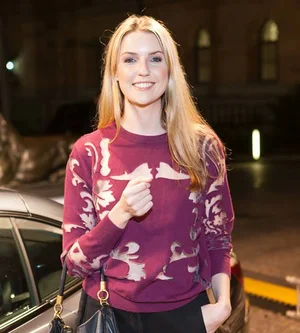
She loves talking about pee, poo and sex, and thank goodness somebody does. Amelia Godfrey is a pelvic health physiotherapist and the founder of Pelvy, an app that puts everything a pelvic health patient needs, exercises, education and their clinician's notes, in one place. In this episode she normalises the health conversations nobody's having, explains why you're probably pooing wrong (really), and shares the brutal honesty of bootstrapping a health tech startup: a $40k developer disaster, the house deposit that funded the rebuild, and the pilot that just hit 100 patients.
Why does pelvic health need an app?
Because pelvic health runs on advice, and advice gets lost. Complex patients, bladder, bowel and sexual symptoms across multiple organs, should be seen 8 to 12 times, and Amelia has had patients arrive with entire folders of handouts. Meanwhile the exercises are genuinely hard to get right: proper pelvic floor work means fatiguing the muscle, up to 60 quick squeezes, ten 10-second holds, a minute-long 50% squeeze, and most of her patients, postpartum, perimenopausal or in persistent pain, are managing brain fog on top. "I've never met a patient who says Kegels didn't work who was doing the right dose." Pelvy puts the program, the education and her session notes in one app the patient just opens, with the clinician paying so patients start free.
Are you pooing wrong? (Probably)
The segment that will change your bathroom habits forever. Amelia's claim: "I've never met a patient with endometriosis or pelvic pain that poos optimally." The mechanics matter: a squat-like position with an optimal hip angle, flat feet (tiptoes tense the pelvic floor and cut things off prematurely, hello haemorrhoids and prolapse), and widening your belly as you go rather than drawing it in and bearing down. Stool form matters too, and the stakes are real: faecal incontinence is the biggest reason for nursing home admission. In Amelia's household, they celebrate good poos, and honestly, after this episode, you might too.
What happens when your developer takes $40k and can't deliver?
"I got done," Amelia says plainly, and it's a story every non-technical founder should hear. Fourteen months and $40,000 into development, house deposit and wedding fund money, she made the call to cut her losses. A pre-accelerator program connected her with a CTO who reviewed the code and confirmed the damage. The silver lining: the failed build became her prototype, clinician feedback on it shaped a leaner rebuild with her current developer, and the hard lesson stuck: "If you really avoid conflict, or uncomfortable feelings, or feeling like you're failing, this journey is not for you if you're non-technical and need a technical person." She still works three days a week as a physio to fund it all.
How's the pilot going?
Better than she'll let herself celebrate. 42 clinics including two GP practices are in the pilot, she's onboarding every user personally, and, announced for the first time on this episode, Pelvy just passed 100 patients. Revenue starts flowing as the model kicks in: it's B2B2C, clinicians pay a modest subscription and their patients ride free for a trial period before converting. Her 2026 focus: process the pilot feedback, optimise for patients and clinicians, reach the pelvic pain and endometriosis clinics across Australia, and nurture the clinics she has rather than chase more. "I don't actually want more yet. I want to look after them and their patients."
Amelia's one piece of advice for women in business
"It's a bit cliché, but you can't pour from an empty cup. Really consider: what's your role in your relationship, your household? Do you have the support? How are you rejuvenating yourself?" Even the basics, eating and sleeping, get interfered with as a founder. And her second one deserves its own frame: "The smallest little things every day add up to something big." She documents every milestone on a free Miro board, because "as women, we're perfectionists, we want to get to the next thing", and looking back at the traction is how you remember to celebrate.
Meet Amelia Godfrey, Founder of Pelvy
Amelia Godfrey is a pelvic health physiotherapist and the founder of Pelvy, an app built by a clinician for clinicians and their patients, putting pelvic health exercises, education and clinical guidance in one place. She treats patients of all genders across bladder, bowel and sexual health, is on a mission to normalise the conversations we've made taboo, and is currently piloting Pelvy with 42 clinics across Australia.
You can find her here:
Full transcript
Danielle: Oh my god, Amelia, welcome to Spark TV! I'm so excited to have you here!
Amelia: Thank you so much for having me, I've been looking forward to this.
Danielle: Same! Because we get to talk on our virtual vinos, but not in depth, you know? It's kind of "what's going on this month", high level. So I'm super excited to learn more about you and your business, because I already think you're amazing.
Amelia: Yeah, I'm excited, because even on the virtual vinos, you don't want to take up too much airtime, right?
Danielle: Although I would like to. I'm like, is this a therapy session just for me?
Amelia: Yeah, exactly! So, my name's Amelia Godfrey, and I am the founder of Pelvy, which is a pelvic health app for all things pelvic health. I'm a pelvic health physiotherapist, and essentially I made Pelvy to use myself as a clinician with my patients. I have a bigger mission, which I'll talk about, but the thing with working in pelvic health is we give a lot of advice. A lot of advice. We try to cram a lot into appointments, which is something I have to work on, but there are some patients who say, I can only afford two appointments, give it to me. So you layer on all this advice, and you give these very elusive pelvic floor exercises. We have clinical software and exercise prescription apps we can use, but they're really not specific to pelvic health. I've worked in a public hospital and a couple of different private clinics, and I realised there are some very big recurring themes and pain points, for us as clinicians, but also for our patients.
I really had to make this when I started working more in pelvic pain, because these patients are complicated. They have bladder, bowel and sexual symptoms, so it's affecting multiple organs. It's not just, hey, I'm leaking, I only have a bladder concern. They're not straightforward, and there's a lot of advice. Research shows we should be seeing these patients 8 to 12 times.
Danielle: Wow.
Amelia: So imagine you're giving a handout every time. I've had patients come to me with a folder of information. It breaks my heart. Until recently, before Pelvy, I was sending email summaries, but even then it's like, which email was that in? If you have to search and sift, there's a barrier to accessing your education. So that was my really important feature: all of my notes go in there, I can update it every time I see my patient, and everything's just in the app. You open it, it's there. And then, have you ever done pelvic floor exercises? This might be a very personal question!
Danielle: Oh my god, I'm literally sitting here going, the only thing I can relate to is Kegels.
Amelia: Yeah. So if we're dealing with improving strength, we have to fatigue the muscle. Most of my patients say, oh, I've tried Kegels, it didn't really work for me, I must be doing something wrong. And usually it's that you're not doing the right dose. You're not fatiguing the muscle enough, and you're maybe not activating the right muscles. Say you have symptoms but your pelvic floor can do more than a few repetitions: we'll give patients up to 60 quick squeezes in a row, ten 10-second holds, and then a long hold, a 50% squeeze, for up to a minute. You realise it's such a mental exercise as well as physical. And most of my patients, thinking about people who are postpartum, perimenopause, persistent pain, they've all got chronic fatigue or some type of brain fog. So I wanted to make something where we could easily put it all in, and it's like: cool, check your phone. Everything in one place. Because my patients had things written in a notes folder, alarms set on their phone, an app they pay for that I can't customise. I wanted something easy for us to use, and even easier for the patients, most importantly. And ideally the pelvic physio pays for it, so the patient gets it free for a period of time.
Danielle: Oh my god, this is incredible. We've got so much to talk about! But how did you even get into this niche? I'm sure you didn't finish school and go, pelvic floors are for me.
Amelia: Interesting! So, I studied physiotherapy, and I worked in the hospital system. I actually did know I wanted to do pelvic health, but I understood that I really wanted a broad range of experience first, so I've worked in the stroke unit, intensive care, rehab. I felt like, I'm pretty young, I don't want to go into this one area and feel like that's all I can do. And I'm glad I did that. But I always knew I loved pelvic health.
Danielle: Why? What is it? Tell me!
Amelia: I'm an over-sharer! All my friends know, I'm deep and personal, they tell me their weirdest and wildest things. I just love to talk about pee, poo and sex!
Danielle: My favourite, taboo subjects, I love it!
Amelia: And I think I've developed skills over time to help normalise things. It's such a privilege for people to talk to me about this. I see patients with penises as well, so I have a lot of older blokes coming to me needing to open up about their erections, or their leaking, or their pelvic pain, which they actually feel even worse about, because it still has a taboo. It's such a privilege. So since I graduated, I always used my professional development fund on women's health courses, and as I got more into it, men's health courses. And it takes a lot of skills to work towards treating pelvic pain, because it involves doing the opposite exercises: you're not working on strengthening, you have to work on relaxing the muscles, stretching the muscles. It's very complicated. I loved how I could keep building on it. As a physio doing musculoskeletal work or intensive care, I felt like there was nothing I could keep building towards over the years. Pelvic physio is different that way.
Danielle: Wow, that's incredible. And so good that you're normalising the conversation. There's a lot of embarrassment and shame around "am I normal, should I be feeling this?", and you want someone who makes you feel like it's okay to talk about it.
Amelia: Yeah. And my bigger vision with Pelvy is to have a place where people can just get answers to those questions. What is normal? What are the signs of things? And interestingly, from my consumer feedback: I originally wanted Pelvy to be quite separate in its guidance sections, because I treat non-binary patients, and I thought, say someone has a uterus, they might feel uncomfortable hearing about penis-related things. But I actually found out that the big majority want to know about the opposite sex as well, because they want to know for their partner, their family, and people just love to know about these things. I have a bit of a personal journey with what changed my life through pelvic health as well. And it's pretty devastating, you can cause some irreversible damage just by not pooing properly. I love to help people wherever they're at in their journey, normalise it, and spread awareness. With Pelvy, I can do that with a much larger population, whereas working 9 to 5 as a pelvic physio, I can only help my own patients. I wanted a bigger impact.
Danielle: Now I'm freaking out that I'm pooing wrong!
Amelia: Well, you can join my course and learn about the bowel stuff, because it is life-changing!
Danielle: Isn't it wild though? Something you do every day, and you're like, how could I be doing this wrong?
Amelia: Basically, I've never met a patient with endometriosis or pelvic pain that poos optimally.
Danielle: Can we talk about this?! How do you poo optimally?
Amelia: It has to do with your stool form as well, but if you have a nicely formed poo, ideally it should all come out at once. You shouldn't be prematurely cutting it off, you shouldn't have to really move around and push. It should be pretty effortless. The perfect ones take less than 20 seconds. You give it a bit of pressure, but… I never knew what it was like to poo correctly until I was in my mid-20s. In my household, we celebrate good poos! It's about positioning, but it's also about what you're doing with your tummy. You have to be in a position with an optimal hip angle, which is why squatting is best.
Danielle: Because I've seen those stools where you raise your feet up, and I wondered!
Amelia: And you need flat feet, you can't go on your tiptoes. People say, but I use my tiptoes! But if you go through your tiptoes, it often leads to tensing your pelvic floor, which literally squeezes the rectum and prematurely cuts it off, and you can get haemorrhoids, prolapse, and so on. And it's about widening your belly, being able to really relax and widen it, whereas most people draw it in and bear down. So try getting in that position, widening your belly, and keeping it wide as you generate that pressure. That's what widens and softens your pelvic floor. It's a game changer.
Danielle: Oh my god. And is it all position, or is it also diet?
Amelia: Well, if you have type 1 poos, the little nuggets, you're going to struggle regardless. And if you have leaking issues with poo, overflow, or diarrhoea, the anus isn't meant to keep that in. I've said to patients: you're not meant to be able to keep that in. The rectum is not sophisticated enough to tell the difference between loose poo and wind. That's where people cannot trust a fart! And I've been there, and I've got no problems with my anal sphincter, I promise you that. One of my favourite cases to work with is the oldies having accidents on a diet that gives them really loose poos. Once you optimise the stool form, it's a game changer. Faecal incontinence is the biggest reason for being admitted to a nursing home. Patients would barely be able to make a trip in their car. And that's an easier thing to fix.
Danielle: Wow, that is so fascinating. And it blows my mind that it's such a daily occurrence, but it's not like school or your parents teach you any of this. We're all living in the same human body, doing the same things every day, but who would know?
Amelia: Yeah. I often teach my patients and they're like, oh my gosh, I need this for my 3-year-old. What do you get taught about toileting? Go when you feel the urge, don't have an accident, and how to wipe. That's it. It's really key for growing up without toilet trauma. Kids have some big problems too, and pelvic physios can work with kids as well, which is really rewarding.
Danielle: Oh my god, this is amazing. So, the inspiration for the app is so clear. What's it been like going from in-practice, one-on-one, to being a tech founder?
Amelia: Terrible!
Danielle: Oh my gosh!
Amelia: Honestly! I obviously had the expertise, I could design it how I wanted, and I had the materials. I still got a lot of people to advise me, because I don't claim to be the expert in pelvic health, far from it compared to the experts in Australia, so I involved a lot of pelvic physios. But it was really hard to know what to do, and who to get as a developer. And I had a pretty bad experience, which is really common. Essentially… I got done.
Danielle: Don't worry, I got done too!
Amelia: Basically, I wasted 40 grand, and I had to make a really tough decision 14 months into them developing it, to say: I've got to cut my losses, I can't afford to waste this time with you anymore. Fortunately, I did a pre-accelerator program where I met someone who was a CTO, and he looked at the code. I've learned so much. But that's definitely been my biggest, biggest trouble. I haven't had problems getting users, I posted on a clinical Facebook group describing what it was going to do and had 150 emails, people saying, oh my gosh, this sounds amazing. It wasn't that. It's that I just don't have the brain for the tech side, I'm not a business person by training. It's been a lot of learning so many different things, figuring out what I can do myself and what I need to outsource. Because I've bootstrapped as well. This was my house deposit. This was my wedding fund.
Danielle: It's so annoying and disappointing and infuriating that this is the most common story. It happened to me too. It was also my house deposit, and then maxed-out credit cards, and this and that. It's such a common story for a non-tech founder, and a female non-tech founder, to be wooed by the developer who says they can do what you need, only for you to pay money, get halfway through, and go: wow, you really can't do what you said you could.
Amelia: Yeah. Although I wouldn't have found my current developer had I not had that problem, so if we really need to put a silver lining on it… And having what I now call my prototype, it wasn't going to be good enough to launch, but I was at least able to get feedback from clinicians on it, and that made developing this next version possible. I had to go leaner, fewer features. But that's definitely been the worst thing, not speaking the language. And people say, just learn to code! And I'm like, this guy who's such a whiz is having to put in a lot of work on this. How am I supposed to learn that? I don't think that's fair to say.
Danielle: I totally agree. Realistically, in business there are so many things you have to learn. Now you're a sales and marketing person, now customer service, now finance. You can't also learn to code and be a developer. It's outrageous.
Amelia: Yeah. Especially bootstrapping. I'm working 3 days a week as a physio to pay my bills, and Pelvy is just this abyss taking my money! But, you know, we're going to have revenue as of next month.
Danielle: Oh my god! How does that feel? Looking back on everything you've been through, being so close to being in market?
Amelia: It's surreal. I think people always look for the next thing and aren't really satisfied with what they achieve, which is such a big achievement. You're so desperate to get the next thing happening, "it'll feel so great when I'm at this point". But it's such a big achievement, given how long it's taken to get here. It won't cover the bills at first, it won't cover my developer, and it's not paying me a wage yet, but that's okay.
Danielle: And it's showing you that you're on the right path.
Amelia: Exactly, exactly.
Danielle: Power to you. Because it's not easy to take the risk and spend all your money on someone who says they'll do something, then go through that pain, and go: that really sucks, but I'm going to keep going, because this is important to me, this is my vision, and I will make it work. And it's hard, because when you do spend the house deposit, you're faced with: I'm still going to do this, but how do I take the next step?
Amelia: Yeah, and you're living kind of below the line, because you're putting everything into it. You're pausing things. I wouldn't have done this had I not known we weren't having kids for the next few years. There's no way I could have done this with a family. I really had to think about that.
Danielle: Yeah, and that's an interesting challenge women face, isn't it? The business, plus going to work to fund the business, plus looking after the household, whether that involves kids or not, it's usually the woman managing it. There's so much we juggle.
Amelia: Yeah. I'm glad I searched for a partner who's not only capable of looking after himself, but capable of taking my weight as well. He's great at cooking, he can clean. But I wouldn't have put myself in this situation had I not been in my situation, you know?
Danielle: Totally. And amazing that you have a supportive partner, because I know sometimes we bag men out a little bit, but some of them are really good!
Amelia: Oh, I have to reinstate the boundaries sometimes! But it's so funny, we joke, and I'm like: babe, I am the CEO of a multi-million dollar company. Do not trouble my brain with that.
Danielle: I'm gonna use that!
Amelia: And he just melts, and he's like, make Pelvy work and it'll all be worth it! We joke around, I'm like, are you ready to be my sugar baby? And he's like, my dream, my dream!
Danielle: That is so funny, my husband's the same. He's like, when will you be a billionaire so I can quit my job and lay around the house all day? And I'm like, I'm really working on it, baby!
Amelia: He loves his job, and he'll be making good money when he's finished his training. But there are so many women who have supported their husband's career, and not had their own career, and so selflessly done things, and we don't really give them praise. It's kind of expected. And I'm like, no, you want to earn the future with me? You bloody put the work in. Thank you, mister!
Danielle: Oh, I love this! I'm taking this attitude into the rest of my day.
Amelia: "I am the CEO of a multi-million dollar company. Is this a CEO question? Figure it out yourself." Well, that's the great thing about ChatGPT: sorry, that's a question for ChatGPT!
Danielle: I just love that. Don't trouble my brain with these menial questions! Oh my god, I love it so much. So, because we're recording this at the end of 2025, I'm asking everyone: what's the vision for 2026? What's the plan for Pelvy?
Amelia: Well, we've started our pilot, which is where clinicians are using it with their patients. Nothing's automated, I'm onboarding everyone myself, and if there are individual users, if you wanted to join and learn how to poo very well, and so on, I'm onboarding those too! It's a big process. We're getting feedback, and by the end of January we'll have processed all of it, and we're making the changes to really optimise the app from a patient perspective and a clinician perspective. My model is a bit unusual: it's B2B2C. The clinicians pay, and they're really not paying much, they pay way more for AI note-writing tools. But that means their patients don't get it free forever, we can't have unlimited patients for an unlimited period. So clinicians signing up patients means eventually the patient pays, and even if a low percentage of patients convert, that's where I'll really be celebrating. We'll have a virtual vino then! But it's got to get through the trial period. I said in the pilot it'd be a 6-month free trial for patients, so I've got to wait 6 months for, hopefully, some bread to come through. I'm regretting that, it should have been 3 months! But these are the things you learn.
Danielle: Well, there's nothing stopping you in 6 months changing it. If in the next 3 months you go, oh my god, this is working, then anyone from here on gets 3 months free. That's the nice thing about running your own business, you get to do whatever you like.
Amelia: Exactly. So my vision is that, and having the capacity to take on more specialists and GPs, we've got two GP clinics in our pilot, and then sharing the results, the patient experience and the clinician experience, with hopefully all the other pelvic pain and endometriosis clinics in Australia. More outreach, based on what the feedback has been, which I'm hoping is going to be positive.
Danielle: It's going to be amazing. I already know how big a gap in the market this is. This is so exciting for you.
Amelia: Yeah, that's what I'm manifesting! And further features, we've got more to develop, but we've got to test it all, a couple at a time. There's one feature that's limiting some clinics from using it, because they already subscribe to that exercise prescription software I mentioned. Once we have that feature, that's really where we'll get a lot more clinicians. But I've already got 42 clinics in the pilot, so honestly, I don't actually want more yet, because I want to be able to nurture and look after them, and their patients, importantly. Because I am everything! Though I've got a virtual assistant helping a couple of days a week now, which was so important, because I was sending emails for hours and hours. Delegating!
Danielle: That's incredible. 42 is actually huge for a pilot. And when you think about loving on them and creating something amazing for them and their patients, this is going to be brilliant.
Amelia: Basically, yeah. And actually, I haven't announced this, so this is my exciting update: it's been a week since other clinicians have been using it, and we've got over 100 patients now. We just hit our 100 milestone!
Danielle: This is huge! That is so incredible. Oh, you're the best, this is so good!
Amelia: It's surreal. I'm really excited. Thank you.
Danielle: I could talk to you all night long, but I always love to wrap up these podcasts with one last piece of advice. So, reflecting on your time in business, what would be a piece of advice that you would give to another woman on her business journey?
Amelia: I think, it's a bit cliché, but: you can't pour from an empty cup. Really consider what your role is in your relationship, your household. Do you have the support? How are you rejuvenating yourself? Even the basics, like eating and sleeping, get interfered with when you're a founder, because you're constantly thinking about stuff. I think in the last 3 weeks of Pilates classes, I've not even had a break, I'm thinking about Pelvy, and having some great ideas, mind you! Self-care is so important, and I'm still really juggling it. But also: literally the smallest little things every day add up to something big. It doesn't feel like much, but it's amazing to recognise how far you've come. If you can document it, it's so cool. I've got a Miro board, the free version, and I just add these little events and milestones. As women, we're perfectionists, we want to get to the next thing, and then it's like, holy crap, I really have had all this traction. So yeah, probably those two things. I have so many more clichés!
Danielle: Sometimes there's a reason we keep banging on about these things, because they're genuinely so important. I do that too, I've got my 365 list, I mapped out 365 tiny things, so if I ever felt overwhelmed I could go to that list and go, here's one tiny thing I can do today that means my business is growing and moving forward. And you're so right, unless it's a giant shiny achievement, we forget to celebrate. Sometimes we don't even celebrate the shiny ones.
Amelia: I know! When my app got onto the Apple Store, it was so exciting. And then it got on Android, and it was like, oh yeah, okay. Desensitised already! Like the Shania Twain song, that don't impress me much!
Danielle: Oh my god, well, we will be celebrating you.
Amelia: I'll have a bottle of really expensive red wine when the 6-month conversions come through, and I'll send you one, Dani, and we'll open it and have a glass together.
Danielle: We'll be very fancy about it! Oh my god, Amelia, you are the best. Thank you so much for spending your time with us in Spark. So much wisdom, so many good stories. You are absolutely incredible.
Amelia: Thanks, Danielle.