#awinewith Damia Ettakadoumi
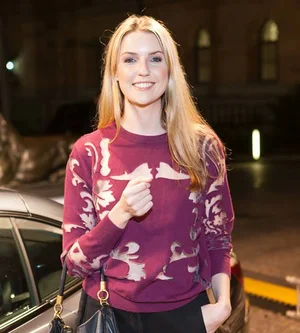
MEET Damia Ettakadoumi, Founder of Straight Up.
You can find them here:
Transcript
Danielle Lewis (00:00):
You are listening to Spark tv, where we bring you daily interviews with real women in business at all stages. I'm your host, Danielle Lewis, and I am so grateful to have you here. So good. Damia, welcome to Spark tv.
Damia Ettakadoumi (00:16):
Thank you. Thanks very much.
Danielle Lewis (00:18):
I'm so excited to hit record on this conversation because otherwise you and I are going to talk all day.
Damia Ettakadoumi (00:27):
Yes. This gives us a framework and a limited time to speak.
Danielle Lewis (00:31):
That's exactly right. I love it so much. Let's kick things off by telling everyone who you are and what you do.
Damia Ettakadoumi (00:37):
Okay. I'm Damia. I just go by my first name, like Madonna or Rhiannon. So Damia from straight up. I founded straight up 14 years ago as a sole trader. I was really wanting to work from home and getting into my love, which is communicating science and working with researchers across many different fields of science. So I am a scientist by trade. I studied science at university, but I get bored easily. And with science, if you're going to be a scientist, you really have to specialize in something. And I just thought, I can't specialize in anything. I'll die of boredom. So I worked for government for a while and just sniffed around what can I take this? And I fell in love with communications and marketing for scientists. Now, when all this was happening 20 years ago, the idea of science communication or the science communication industry was already starting.
(01:41):
And there were some agencies that were specializing in that, but I found a niche and I went back to uni and did an MBA and scoped all this out. As part of my MBAI found a niche in that we communicate science and now all forms of research for their target audiences, which are not generally the public or the media. It's things like companies that they want to work with to develop their innovations. It's funding providers, so the assessors of grant schemes, it's other researchers. They often want to collaborate with other researchers. So their target audiences of our clients are not the general public. It's those specific audience types.
Danielle Lewis (02:27):
Wow, that's so interesting. And I mean it's fascinating because you think about, so I'm a sales and marketing person by trade, so it interests me that you say you found a niche figuring out the scientists and researchers and academics. Target audience was not the general public because when I think about sales and marketing from a business point of view or a brand point of view, that's quite often what we do is we go, who is the person that you're speaking to? So it's very Yeah, totally. And so it's so interesting. That wasn't really a thing in the scientific world.
Damia Ettakadoumi (03:04):
Yeah, because you don't know what you don't know. And I guess researchers are really good at what they do, and I find this happens even with us marketing people. We get so into our discipline that we sort of can't see ourselves anymore. We can't see the perspective of others. And that's what happens with scientists. They get so into their work, they think it's the most important thing ever, and rightly so. I'm glad they feel that way, but they lose perspective on how others see them and what's in it for them.
Danielle Lewis (03:35):
And I mean, that's even interesting. I find that for business owners as well, everyone, you just get so involved in what it is that you're doing and your mission. And yes, you're right, rightly so. We all should be so passionate about what we do, but sometimes ask someone what they do and they will talk at you for 10 minutes and you're like, I still don't even understand what you're doing. But they're just so into their thing. You really need to be able to distill your message and what problem you solve to your target audience.
Damia Ettakadoumi (04:09):
That's exactly right. And so our target audiences, for example, and this will help other business owners watching today, our target audience, we have developed our key messages for researchers, scientists, innovators, so we work with tech companies as well. So someone who's not our target audience probably wouldnt respond to our messages in our copy and our marketing messages. So yeah, my advice to other business owners is to really understand who it is that you're selling to or partnering with or who your suppliers are, even if you try to get a good deal with suppliers and what do they want and try to find a position where you are getting what you need to get done, but they're getting something out of it as well. And you can only do that by understanding who they're and what they're trying to do.
Danielle Lewis (05:01):
This is so great. I always talk to the people I need in my life on these podcasts, and I was just, before we hit record, I was saying, I'm just working on the next evolution of Spark and I'll be writing the new landing pages this weekend. And so now you have in my head, okay, no, I need to think about this from my audience's perspective and what's in it for them and what do they get out of it. So I'm so glad we literally had that sidebar because now you've given me a mindset.
Damia Ettakadoumi (05:32):
Yeah, good. Excellent.
Danielle Lewis (05:34):
How funny
Damia Ettakadoumi (05:35):
Now,
Danielle Lewis (05:36):
14 years. That's a long time to be running your business. Oh my God.
Damia Ettakadoumi (05:42):
So I was having kids during that time, so it gave me the flexibility to work on and off and to only work from home. Kids are growing up. So just recently, just going back just five years ago, I was still a sole trader. I was using subcontracted or bringing subcontractors in as I needed them when I had more work on. But then I reached this tipping point where I always needed other people, and the other tipping point was my kids getting old enough to be in school and want to hang out with their friends rather than me. And there's an interesting point where that happens, and so that freed me up to turn straight up into a company, which we did six months ago. So in a way, we're new because we are restructured and many of the subbies I was working with are now employees of Straight Off as the
Danielle Lewis (06:37):
Company. Oh my God, congratulations. It's a cool business milestone. It's very cool. What's it been like? How has it felt moving people from contracting positions to full-time positions? That always freaks me out.
Damia Ettakadoumi (06:53):
Yeah. Yeah. Look, on a personal level, I feel awesome about it
(06:57):
Because I'm supporting, it's mainly women, mainly mothers, not all. I've got one guy and someone without kids. But yeah, they are women who are highly qualified. I've been in the workforce before and have either fallen out of it or just not liking it, not liking having to go into the office and work that eight hour day and not be totally aligned with the vision of who they're working for, that sort of thing. So I love, it's really personally rewarding to be employing people who can juggle their family commitments or their personal goals. Some of them have their own personal goals. They want to start their own business one day, and so they just need something that they can do on the side. So we've got a couple of part-timers who are like that, and so yeah, that's very rewarding from on a business perspective as a business leader, it's scary because I have to pay them first every two weeks and I have to pay their super contractors. You can negotiate it and it's on and off. It's stop and start. It's like, well just do this one piece of work and then see what happens next. Whereas with employees, I'm committed to paying them. The paying bit is the thing that worries me the most because of any business owner will know this. Cashflow, sometimes cashflow, sometimes it all comes in at once. Sometimes clients just don't pay for a few months. So that's a juggle.
Danielle Lewis (08:35):
Isn't it funny, I remember the first time a client didn't pay on time. I was like, what is this? And you're like, nobody tells you that. Sometimes clients just don't pay their invoices, but you still have to pay your team.
Damia Ettakadoumi (08:50):
Yeah. You still have to pay your team and you can't be late with that. The first thing that I need to pay every fortnight, and rightly so, y it's rightly so. It does cause me to stay up sometimes thinking about it and just wondering how I'm going to make that next pay run. Yeah.
Danielle Lewis (09:14):
Oh, totally. I totally get that. Have you found any strategies that have helped prepare for that fortnightly?
Damia Ettakadoumi (09:23):
Yes. The best thing that I could do is keep a buffer in my bed camp. Yeah, that is the way to do it. Just make sure you have a buffer. For me, it's $20,000. I need to have that there. That would cover two pay runs, and it just gives me certainty.
Danielle Lewis (09:44):
Yeah, that's really good advice. I know some people who employ the Profit First Method have all these bank accounts, and I'm way too not into admin to have five bank accounts, but I probably would do more of what you are talking about in the terms of knowing, okay, that's the number I need. That's my safety net. So if things people pay late or we lose a customer or something like that, I've got that buffer there, so I've got plenty of runway to plan for changes.
Damia Ettakadoumi (10:18):
Exactly.
Danielle Lewis (10:19):
Yeah. No, it's a really interesting mindset shift, isn't it? Moving from sole trader with contractors or say a VA where you've got invoices to pay. Absolutely. And you are kind of the person that, okay, I'm not advocating to pay late, but the world doesn't end if you do versus when you do move to a payroll system where it's like that is actually live and die. That is the first thing that has to happen. And I found too, so I scaled my other business scrunch, which I'm now exited to about 20 people, and I found myself going, I feel like I'm working for all of these people now rather than when I was in that kind of sole trader environment where I was like, ah, it's all me and whatever. It was a really interesting mindset shift. That
Damia Ettakadoumi (11:15):
Is a change, isn't it? And couples with that, I'm thinking more and more about how to make straight up a great place to work for them. I'm thinking more about culture, whereas as a sole trader, yes, there was a little bit of that. We're doing good things here and we're helping scientists solve world issues and all that. That side of it is really cool. But now there's this internal working culture of mental health and opportunities for professional development and some people loving to, some of my employees love owning project and really taking the lead on it, whereas others would rather be part of the team and not leading and making sure everyone's getting is happy what they've got.
Danielle Lewis (12:04):
So how are you then juggling the fact that your job has just increased a millionfold,
Damia Ettakadoumi (12:11):
You've
Danielle Lewis (12:12):
Gone from, I've got to potentially win work and we deliver that work to now that kind of company structure where it is so many different things that you've got to think about. How are you juggling that? Personally,
Damia Ettakadoumi (12:25):
I love it. It suits my personality of avoiding boredom at all costs. I just really, I don't want stress, but I just cannot handle boredom. I start thinking about what else can I do and procrastinate. So it suits me. I do miss less of the client work now, and I miss that. And I'm looking at ways in which I can do more of that, and that is by bringing on a, so my other full-timer is now responsible for managing staff or being that first point of contact for staff. So that has freed me up quite a bit to do the stuff that I really love doing with clients is facilitating workshops and coaching groups of scientists and that really transformational stuff I love. So it frees me up to do that.
Danielle Lewis (13:21):
I love that. I think it's really important to remember why you started and what you actually love doing and what brings you joy in the business. I mean, it's fabulous to scale, to hit these milestones, but if you find yourself a little bit like, oh, I don't get to do the stuff I like anymore, then sometimes it loses its sparkle a little bit.
Damia Ettakadoumi (13:45):
Does speak. Yes, absolutely. So I wanted to avoid that, and that was a way to do it by having an offsider who can take their management responsibilities. But for other business owners, it may be other things that they want to offload. Maybe it's their business development. I like the business development as well. I find that exciting. And again, it suits my personality, but others may not love that. And then you can bring someone in who is good at that.
Danielle Lewis (14:13):
And I love that about business or running your own business, is that we can actually be super intentional about what our role actually looks like. I was having a chat to another woman in business and she was getting advice that if her company was to grow, she had to stop doing delivery and just be all in on sales. And she was like, oh, but that's the bit I like. And she was really down about the fact that someone had given her that advice. But I do love that. It's like actually it's totally within your control. We get to structure our businesses so that we can, yes, don't get me wrong. We're always going to do stuff we don't want to do, but we get to structure it so that we can squeeze some of the joy back in there.
Damia Ettakadoumi (14:58):
You can really think about, well, what are the bits that I love and add value to? And you don't have to outsource them. There's no rules for that. Yeah, you decide. I love that too. Oh,
Danielle Lewis (15:10):
So good. So over the last 14 years, what do you think some of the bigger challenges have been for you in business?
Damia Ettakadoumi (15:19):
So for a long time it was the subcontractor model using subcontractors for several years. That was really challenging because the nature of our business is we're very deadline driven. Most of our deadlines are not deadlines that we've created. They're grant. So we do a lot of grant writing for researchers and for innovators. So they're the bigger grants like Cooperative research center projects like a RC, the Australian Research Council, which there's billions of dollars a year available to university researchers and to innovators in industry. So innovation companies. And so we, what's my train of thought?
Danielle Lewis (16:10):
Oh, challenges. Challenges over the deadlines, subcontractors,
Damia Ettakadoumi (16:14):
Deadlines. So I'll bring in a subcontractor for a certain amount of money, which usually equates to a certain number of hours, but a lot of these bigger, more complex grants usually. Sometimes there's three or four universities on them and all the admin that requires, and then there'll be three or four companies. And so we need to get everybody agreeing to what is the grant going to be for? What sort of technology you going to develop, how much you're going to develop it? Where are you going to do it? What equipment do you need? What do we need to buy? What could we hire? What are the researchers going to do? So we'll split it into research programs. I'm simplifying it here, but the actual nuts and bolts of doing that is really complicated, and it's really hard to determine how many hours it's going to take.
(17:06):
If researchers have gone for these sorts of complex grants before, they're usually easier to work with because they know what's expected of them. But younger researchers or those who just haven't done it as much, then that requires more of our time. But I've charged a package price or I've quoted a package price to the client, which means we'll get it done no matter how long it takes us, but only a certain number of hours with a subcontractor. So for subcontractor runs out of hours, that's it. They stop and I have to do weekends, nights, early mornings, whatever to get it done. I found that really challenging. There were times where I worked 25 days in a row.
Danielle Lewis (17:50):
Oh my God.
Damia Ettakadoumi (17:51):
Full-time every day because the buck stopped with me. Whereas when you have employees, you decide they're there 40 hours a week or 38 19 hours for the part-timers, and they work on what is most important. And if that is getting a grant over the deadline, then we pull out all stops to do that. So it's lightened that load for me, and I have my weekends back.
Danielle Lewis (18:20):
Oh my God. Mostly. Yeah. Which you then fill because you get bored. Oh, I love it's, it is really interesting, isn't it? So people has been my biggest challenge in business, and I think that I was under the illusion when I first started that people would be as excited and as passionate as I am. Yes, I know that was a hard pill to swallow, but you're so right. We live in a world where not everybody wants to run a business. This is a thing that we have decided that we want in our life, and we want to fill our life with the excitement slash stress of building this thing. And it's just not everyone's cup of tea. There are plenty of people that want to commit to hours or commit to a nine to five or whatever the structure is, and we really have to be respectful of that as much as we can.
Damia Ettakadoumi (19:22):
We do. It's our choice to live the crazy life that we do, and I wouldn't have it any other way, but plenty of people would. And so yeah, I definitely want to respect that We are really big on diversity in our workplace, and that's not just diversity in the traditional sense of any sex culture, background, whatever, but also in terms of diversity of how we want to work. And so we operate a totally flexible workplace. So people work when they want, when they want. Yes, the full-timers full-timer and the part-timers part-time. But if they want to do less, there's no restriction on how much time without leave. They can take without paid leave. So if they've used up their paid leave, they can take as much extra time as they want. There's no minimums on that. So I am really attuned to that and respectful of it.
Danielle Lewis (20:24):
Yes, which is amazing. But it does present a challenge for you as a leader to balance all of that whilst balancing deadlines and client delivery.
Damia Ettakadoumi (20:35):
It does, and yes, it does. I'm really lucky and lucky to have a team who really does care about their work.
Danielle Lewis (20:45):
They
Damia Ettakadoumi (20:46):
Do care about their, and they will think really hard about grant deadlines and making sure they're there. They're showing up for those big projects. I haven't had anyone leave me in a lurch at all.
Danielle Lewis (21:01):
That's so good. Have you got any tips on finding those incredible people? Have you gone about this in a specific way?
Damia Ettakadoumi (21:09):
That's a really good question because that is another challenge that I had, especially the first 10 years of business. I kind of gave work to anyone who asked for it and thinking, oh, cool, let's work together. And then realizing that while I love them, they weren't always the best fit. And then I realized, hey, I actually need to be selective about who I hire. It's not just anyone who comes up and asks for it. Actually, there's certain skillsets that I, and not just skill sets, I'm not just about skills because they can be taught the skills. It's about really high level of emotional intelligence so that they get along with the clients and understand what the clients are saying, what they need, and being able to pivot quickly in stressful times, which deadlines can be very stressful. So a high level of emotional intelligence, high level of word, not organizational skills. It's wanting to show up. They want to be their best. So I look for that in a person now that I'm looking at hiring or are they the sort of person that wants to, they'll volunteer for the hard things because they want to be held out. So I look for that quality. Yes, I do want someone with a science background because that's our model with scientists who have retrained in marketing and communications and business. But I want those other things as well. I need those other things.
Danielle Lewis (22:43):
I love that. That's again, a lesson that I learned as well. But those people really do exist. Just you do have to be super intentional about finding them.
Damia Ettakadoumi (22:54):
So I didn't answer your question about that. We don't advertise for our roles. I don't think we've gotten big enough for that yet. It's only been six months maybe when one of our staff leaves, we'll need to fill it with advertising. It's all been subcontractors. We've had one new person, but it's all been through our networks. So people we've worked with before or know of who's been recommended to us so far. That's the only way I've hired people,
Danielle Lewis (23:27):
And I think that there's actually a lot of merit in those referrals. I mean, I've always found it interesting advertising a role on seek and then calling someone's references and it's like, of course they're going to give them good references. They wouldn't put them down if it wasn't a good reference. So I actually love, and I prefer that model of sometimes I will actually, even if I don't want someone in the contract position, do a contract first for a project to see what they're like because it's like, I want to pay you for your work, but I need to see what you're actually going to be like when you show up on day one.
Damia Ettakadoumi (24:08):
That's a good idea. So I'll do that in future because mine are nearly all subs, ex subs. I've worked with them all before and there are known, although I say that there are known, a known known, but people had said to me, a couple of people, including someone I had as a business coach last year, said to me, just watch out. When you turn them into employees, some people will change how they work. They might not be as attuned to deadlines and wanting to get things done as they were when they had to invoice only once the work was complete. Yeah.
Danielle Lewis (24:51):
Oh, that is so interesting, isn't it? I guess if you're a contractor, you do have to be hungry for the hours, don't you?
Damia Ettakadoumi (24:57):
Exactly. And you want to do good work because you may not be hired for the next job. So their experience, this business coach's experience was that that could change and the employers can be a little bit more relaxed, but I haven't found that because as I said, I'm really lucky that I've found that I've got this amazing team around me in future that may be an issue. I will keep an eye out for it.
Danielle Lewis (25:23):
I love it. I love it. It's good to talk about these things because I think we all experience some level of the same issues and challenges, and it's always interesting to get people's insights on maybe little things that they do that can kind of help other people not experience those challenges. I'm super curious through this conversation and before we hit record, we were talking about how we will fill our time because we are avoiding the boredom and we love a little stress in our lives, and we're obviously crazy because we're business owners. I'm curious, and also you obviously have a family, you're a mom as well, so you've got that on your plate. I'm curious to know where you're at in terms of do you ever prioritize rest self-care, or do you just thrive on the pressure?
Damia Ettakadoumi (26:21):
Oh, that is such a good question. I definitely do better if I rest, but I find it hard to rest. I find it really hard to switch off sometimes. That is something that I have not solved work-life balance, because even if I force myself to rest, I can't stop my brain. I might be able to look at something else for a while or hang out with a friend or watch something on Netflix and that takes my mind off it for a while, but then I'll turn that off or I'll leave the brunch with my friend and then bang, this work commitment will suddenly hit me and terrify me for a moment. So I'll get that rest in and then we'll be like panic for a moment. I have not worked out how to avoid that. I don't know even if I should stop it, maybe that's my body saying, you need to keep fine tuning what you're doing. You're not quite there yet, so maybe I should fear it. Maybe I should just go, oh, this is happening to me more these days. Maybe I need to book in a holiday or turn down the next contract or something. I say that, but I'll never turn something down. Me either
Danielle Lewis (27:40):
Talking about I know, I know. The only thing I like though that you say you almost dip into rest, right? You'll have the brunch or you'll watch the movie or you'll do it. I've kind of, because I can we do that. Yeah. So I've coined it micro rest because I actually think, and I know that we kind of went through this period, so those of us who have been in business for over a decade, we would've seen hustle culture, and then it went to this rest soft vibe culture, which I never vibed with because I'm just a crazy stressful person all the time to now this. So I guess for me it's been like what is right for me more than I'm doing it wrong? Because I also get bored at the drop of a hat. I was telling you, if I'm walking on the treadmill, I have, not only do I have sank on the tv, but I also have a desk set up so I can do cold outreach emails or something while I'm doing that. I have three things going at once or I just lose my mind with boredom. Love
Damia Ettakadoumi (28:51):
It. I love it and I can
Danielle Lewis (28:53):
Relate, but I also do get that what'll happen is once every six weeks I'll have a bit of a mental breakdown and I'm like, oh, I need to actually rest this weekend. I need to totally, I need to get bored. I do need to lie in bed for the morning and have a cup of coffee and breakfast in bed, or intentionally not do anything.
Damia Ettakadoumi (29:19):
Yeah, I do those little mental kind of, okay, I need to shut down for a bit. This is, yeah, it's just not working. It's not sustainable.
Danielle Lewis (29:29):
No, but I can't get on board with, I finished work at four o'clock on a Friday and I just can't get on board with that.
Damia Ettakadoumi (29:37):
No, no, me love. That's okay. Totally.
Danielle Lewis (29:42):
Oh my God, yes. Yeah, we're good. We're fine.
Damia Ettakadoumi (29:46):
We're good. We've got it together. We're great. We do raise a really important point there that we haven't mastered it. It's been over 10 years for us and we are still working out. We're still, I call it calibrating. Every day we're recalibrating. So some days we are in a dip, other days we're on a high, but we're always trying to find that middle spot and we probably never will, and that's okay, we'll go past it. We'll cross lines or whatever, but there is no destination. I don't think it is just the journey and listen to yourself and allow yourself to cry. Allow yourself to have those moments where you feel like you're a fraud. And then as long as you get out of it later and go, oh, that's so funny that I had this imposter moment. I had it the other day where I felt like an imposter for a morning, and I spoke to one of my colleagues about it. She's like, it's so funny how we do that every now and again because today I feel completely capable and high impact again. So it's funny, it's funny in terms of bizarre to watch those different mental states and be okay with them, sit with them. It's okay.
Danielle Lewis (31:01):
And I do love that you said watch them. So that's something that I've learned as well is to rather than be in it, is to observe it. And I feel like has really helped me, especially in the down days going, oh, isn't that really interesting? How yesterday, yeah, I was on top of the world, I made sales, I was doing it, and today I feel like I want to quit and it's all not worth it and whatever. I've found that just trying to get, observe it rather than feeling the feelings as much has helped get out of it faster.
Damia Ettakadoumi (31:34):
Just even the language you use then you sort of spoke about yourself as if you had two voices. One voice is like the angel on your shoulder saying, isn't it funny how you are stressing today and you're feeling blah, blah, blah. It's like, I is talking to you, but you're the same person. That kind of self-talk is really cool because I, in that case, can be the one that goes, that brings a rational thinking to it. Everybody does this. It's totally normal and it's really
Danielle Lewis (32:04):
Fascinating. And also the one I love as well is I can do it anyway, so I get that you feel like shit today, but we can still send this proposal and we can still send these emails. We can still do the podcast recording. We can still do that because I also find that if I say that to myself, do the thing that also helps get me out of the state because then I've had a little win.
Damia Ettakadoumi (32:33):
I'm going to use that. Cool. Yeah, I'm going to steal that if that's okay.
Danielle Lewis (32:38):
Oh my God, please. Oh my god. I could talk to you all day, but I always like to wrap up these podcasts with one last piece of advice. So reflecting on your time in business, what would be a piece of advice that you would give to another woman on her business journey?
Damia Ettakadoumi (32:56):
Okay, I'm going to go back to what we started with, which is intentionality. We spoke about it in terms of us working with our clients to be intentional with who they're communicating to. But you can apply this to just about anything in business. I find it doesn't work to, so, okay, lemme start again. Some business owners don't like the business planning or strategic side of it, which I get. It can be boring. And when you look at something that you've written, so you write a plan for six months from now, you look back six months later. Personally, I love how you find that you've achieved a lot of what you said you would, but then there'll be some aspects of it that were wrong that you're like, I think I put that down. That doesn't make any sense. It didn't, I don't know what I was thinking back then.
(33:49):
So some people think it's a waste of time because you end up changing it six months from now, but this is how I look at it. If you don't know what your end goal is, then how do you know what the first few right steps are? You know what I mean? I find it really important to be intentional about what your first few steps are. You can pivot later, you could change the goals later. You can perpetually change them. And I actually think should, because we live in an environment that is changing that we don't have control over, so you need to be pivoting and changing and growing. But intentionality allows you to work out what the first few steps should be, and without that then you could be scattering your efforts to that anywhere. So that's a fairly general piece of advice. But if we bring it down to marketing, so let's be intentional about who you are marketing to really understand them. So you can't just say women age 30 to 50. It won't be all women age 30 to 50. There'll be specific traits about that group that you're aiming for. So really, where do they shop? What TV shows do they watch? Do they have kids? Do some of them have kids, some don't. What parts of Australia do they live in? Are they in regions? There's lots of different questions that you can ask to really build a good picture of your key target audiences and then be intentional about how you sell yourself to them.
Danielle Lewis (35:36):
I it so much, and I just think it's so fascinating. I couldn't agree with you more about having that direction, that North Star and that intentionality that helps you take those first steps because you're spot on. The plan always changes.
Damia Ettakadoumi (35:53):
It does.
Danielle Lewis (35:54):
But if you're not pointed in the right direction, you're guaranteed not to get to where you want to go.
Damia Ettakadoumi (35:59):
Exactly. That's right.
Danielle Lewis (36:03):
Oh my God, DIA, you are absolutely incredible. Thank you so much. Oh, thank you. Thank you so much for sharing your insights and wisdom with the Spark community. That was absolutely incredible.
Damia Ettakadoumi (36:17):
That was fun. Thanks heaps for having me.
Danielle Lewis (36:20):
That wraps another episode of Spark tv. Shout out to Spark TV sponsor IP Australia for their amazing support of the Spark Podcast and women in business. And if no one tells you today, you've got this.
✨ Thank you to IP Australia for supporting the SPARK podcast and women in business ✨