✨ Thank you to IP Australia for supporting the SPARK podcast and women in business ✨
What does it take to go from financial planner to social media manager to app founder, from a town of 600 people with no postman? Sally Latham is building South Coast Edit, a pocket guide app to the NSW south coast made for the locals, not just the tourists. In this episode she shares how she built her app demo in a week with AI and zero coding, how she juggles the business that pays the bills with the one that has her heart, and the sales reframe that makes putting yourself out there feel natural.
Can you really build an app with no coding experience?
Sally's answer: yes, further than you'd think. Quoted long timelines and big budgets by developers, she built the demo herself with Replit, an AI tool where "instead of knowing coding, you just tell it what you want. I built the demo version of the app in a week." The honest second half: the pretty front end and the user experience are done, but the back end (memberships, payments, push notifications) is where she's bringing in the experts, and that's exactly what she applied for a grant to fund. AI gets you to the demo; humans get you to the launch.
How do you launch an app people will actually download?
Community first, product second. As Sally puts it: "Otherwise you release an app to who?" While the back end gets built, she's out doing collaborations with south coast businesses, showcasing hidden gems, giving before she takes (the local radio station got free advertising, and they'll remember that when the app launches), and building brand awareness with "app coming soon" sprinkled everywhere. By the time it ships, the audience already exists. The bigger plan is world domination, politely: white-labelling the app so any region can have its own version.
How do you juggle the business that pays with the business you love?
Sally runs Savvy Sally, her social media business, alongside South Coast Edit, and her answer is ruthless compartmentalising: Monday to Wednesday belongs to client work, one client at a time; Thursday and Friday belong to the app. One is working in the business, the other is working on it. Fifteen years as a financial planner shaped the other rule: self-fund everything. "If I can't self-fund it, then maybe that's out of reach for now, maybe that'll be later." No loans, no investors, no reporting to anyone but herself.
What if selling felt like helping?
The reframe that changed everything for Sally: "I don't see selling as selling, I see selling as helping. If you really believe in what you're doing, then you are helping people by letting them know about it." The exchange is fair on both sides: they get value, you get paid, and you deserve it because you introduced them to it. Pair that with a little give before you take, and sales stops feeling like The Wolf of Wall Street and starts feeling like relationship building, which, in a small town especially, is the whole game.
Sally's one piece of advice for women in business
Go with your gut, and be 100% yourself. After fifteen years feeling like a square peg in the stiff, professional world of finance, Sally made a conscious decision when she started her own businesses: no more dimming. "If you're gonna stick around for a long time, you have to be who you are. Trust your gut, be yourself, don't dim your sparkle, because that's what makes you unique, and that's what creates a successful business around you as a person."
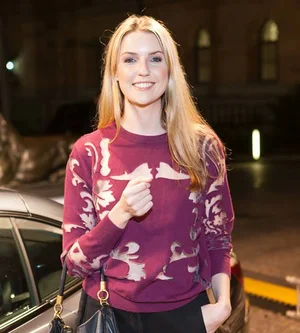
Meet Sally Latham, Founder of South Coast Edit
Sally Latham is the founder of South Coast Edit, a pocket tour guide app to the NSW south coast, from Wollongong through Jervis Bay and the Shoalhaven to Ulladulla, built to get locals enjoying and supporting their own backyard. A former financial planner turned social media manager (her other business is Savvy Sally), she previously co-founded South Coast Kids, released award-winning local magazines she wrote and photographed herself, and is now finishing the app with AI-built foundations and a community-first launch plan.
You can find her here:
Full transcript
Danielle: So good! Sally, welcome to Spark TV!
Sally: Thank you, thanks for having me!
Danielle: Oh my god, I'm so excited. I already know, considering we've just been gas-bagging for the last 10 minutes, that this is gonna be a hoot. And apologies in advance if we're coughing and spluttering, but we're just here, and people can just take it as it comes.
Sally: That's right. This is real life.
Danielle: That's exactly right. I love it. Let's start out by telling everyone who you are and what you do.
Sally: Okay, so I am Sally, obviously, and I actually have two businesses running at the moment. One is called Savvy Sally, which is social media, and I know it's a funny name, everyone comments on it.
Danielle: Love it! Love it!
Sally: But that's the one that I'm actually wanting to wind down, because my other business, my passion, is called South Coast Edit. What that is, I guess, is like a pocket tour guide to all of the south coast of New South Wales. So right from Wollongong, all the way down through Jervis Bay, the Shoalhaven, to Ulladulla. But when I say a pocket tourist guide, it's more for locals, because I want locals to enjoy the area as much as the tourists do, and that's my absolute mission. I live in a tiny town of 600 people. We don't even have a postman here, that's how small the town is.
Danielle: Wild! This is awesome!
Sally: We're a tiny town, but the tourists actually love coming here, because I'm only a couple of hours from Sydney. And so during the week, there's nothing happening, there's no businesses open, there's no one around, and I just have this bee in my bonnet about getting the locals out there more. It's such an amazing area, and I want the locals to get out and enjoy it, support the businesses, so we're not so reliant on tourists. That's my mission.
Danielle: Oh my god, this is so cool! I love it! It's such a personal mission as well: this is the place that I live, I want it to flourish. How did it actually get started? Was it literally you had the bee in your bonnet and you decided? Talk to me about the backstory.
Sally: Oh, okay, I don't know how far to go back. But years and years ago, on an absolute whim, I caught up with a friend that I hadn't seen for about 10 years, just for a coffee, and we felt the same about the area. By the end of that catch-up, we had developed a business, but it was actually called South Coast Kids. It was focused on families at the time. We released a magazine, we did all these things, won a business award, and then we sort of went off and did our own things again. But off the back of that, I got into social media. And the business just sort of sat there, and then probably 2 years ago I went, you know what, my kids have grown up a little bit, the family thing's not super relevant to me anymore, so I'm gonna turn it into an adult version of South Coast Kids. That was back in 2023, I think. So that's what I did, and it was mainly just a social media platform at the beginning, because that's obviously what I do day-to-day. And then my dad actually passed away, and that gave me motivation to get out and do what I really want to do in life. There's nothing like everything changing overnight, which it did. It was very sudden.
Danielle: Yeah.
Sally: So I just went, I'm gonna go all in on South Coast Edit, and I released my own magazine that I wrote myself, I did all the photography myself, all the research myself, because I'm a loon. So I did all that, and released a couple of magazines. But you've pulled my string now.
Danielle: I love this! No, this is so good! I want to know all the goss.
Sally: So that was all the lead-up. I had in the back of my head an idea that I wanted South Coast Edit to be an app. And I realised I was paying all this money and putting all this time and effort into the thing before the thing, the magazine before the app, to try and get the name up. So anyway, long story short, I decided to focus instead on developing the app, and that's where I'm at now. At, not app.
Danielle: App-sessed. I love it.
Sally: So I've built the app as it is at the moment, and it just needs completing. What it is, is a pocket guide for locals to the area, but tourists can also download it. It gives you ideas on things to do, it tells you what businesses are in the area, it's geofenced, or whatever the technical term is, so as you move around, it follows you, and it has exclusive deals as well. So if you're in Kiama, it says, oh, in Kiama, did you know you can get a discount here? And it does that for the whole coast.
Danielle: Oh my god, this is so cool! Okay, hold on a second, though. How have we gone from, you're a media content person, social media, you created a magazine, you've taken photos, obviously that's your skill set, and now you're building an app? How has that process been for you?
Sally: It's been very overwhelming, actually. The reason why I've ended up building it myself is because of the timeframes and the expense of getting someone else to do it. I know nothing about coding. I've done basic things, like everybody has, built landing pages and this and that. But there's a new software program out there called Replit. It's like an AI software program, so instead of knowing coding, you just tell it, this is what I want. That's what I used, and I built the demo version of the app in a week.
Danielle: Holy crap! That's so cool! Oh my god! Okay, cool. So now we have a demo version, and then you're like, okay…
Sally: Yes, so from here, I've got the pretty version that I can show people and take around to businesses, but I am yet to develop, and this is what I applied for the grant for, the back end. And I can't do that, because it's a membership, and it's this and that, and I'm like, that is just too much for me.
Danielle: It's kind of cool, though, that you can actually create something that you can go out and sell yourself, and then also, that makes handing over to a developer so much easier as well. Rather than trying to paint the picture for them, and you are a creative person and they're a tech person, now you can just say, make it do that.
Sally: Exactly, exactly. I've already got exactly how I want it to look, I've already got the functionality for the user, but I don't have the functionality for the back end, and that's what I need to focus on. I've got world domination plans, so…
Danielle: This is so good! I love world domination plans! They're my favourite kind of plans!
Sally: Me too, and I seem to come up with them all the time, but then it gets overwhelming. So once this is fully developed out, the plan is that I will white-label the app, and you can have that app just transplanted to different regions.
Danielle: Oh, that's so cool! So funny, I mean, okay, so this is a little parallel. I moved to the middle of nowhere 4 years ago, mining husband, I'm in Kalgoorlie in WA at the moment. And it always strikes me, in Kalgoorlie, I shouldn't say this, they'll excommunicate me, but they're still in Facebook days. As someone new coming into the community, wanting to see what's going on, it makes it really hard, and it still relies on word of mouth. And I know so many people don't take jobs here because they think it's a crap place to live, but I'm like, actually, they just have a PR problem. They need something like this to say: these are your hairdressers, these are your cafes, these are your pubs, these are your restaurants. Having a platform that shows all of the local places to go, not only do the people who live here get in and amongst everything, make lifestyle better, support local businesses, but it also attracts talent to the region. So this is genius! I'm obsessed with this!
Sally: Well, next we'll have the South Coast app, and then we'll have the Kalgoorlie app!
Danielle: There you go! I'll bring it to Kalgoorlie, I love it. But it's so fascinating, people don't take advantage of where they live. It's so easy to just get trapped in the day-to-day, and everyone always complains about where they live, but actually, you've just got to go out and find the hidden gems. And I love that you're doing that for your community.
Sally: Yeah, that's my life's plan. Long story of how I got there, I don't even know if it's all related, but that's how it happened.
Danielle: Well, I think it is, because that's what I love about business, it's not linear. So many people don't take the leap into business because they think they've got to have it all figured out, and I'm like, that is literally nobody's story. If you talk to anybody in business, whether they have just started out or they're billionaire successful level, the thing that they set out to do didn't happen. It's not a linear path. You see an opportunity, try something and it doesn't work, and all of these are stepping stones getting you to the thing that you're so passionate about. And I love that you had that moment of, maybe it's time to just do the thing that I want to do. How is that for building a business? Having something that you can latch onto and be obsessed about, that gives you the energy to get out of bed. I think that is the missing ingredient in so many people's business.
Sally: Yes, and I find, too, that I kind of know when I'm on the right track, because the vision is so clear. I know exactly the end point of where I want to get to, and with the app, I knew exactly how I wanted it to look. That's what all the refinement was in Replit, telling it, no, I want this to be yellow, I want this to be like that. It was so clear to me how it needed to be. And that can sometimes be the hard bit, because I can see the end point, but getting there, you've got to take all these different steps, and all the learnings along the way. I try and view it all as part of it. You learn from, oh, this didn't work, why didn't it work? Okay, so if I tweak it and do this, then that will probably work out better. I guess you have to have a certain lack of fear of failure. I definitely have a fear of failure, but it's a balance. You've still got to have the guts to just do it, to some extent.
Danielle: Yeah, it's kind of like, be okay with the micro failures, maybe? The idea of experimentation and optimisation always fascinates me, because people get super fixated on the latest trend, like reels or TikTok or whatever, and actually, that doesn't work for everybody. So you really do have to be okay with trying everything, trying and failing. It's not a complete "my whole business idea sucks and everything's over". You have to almost be happy to fail every day, trying little things until you find the thing that works for you.
Sally: Yep, totally.
Danielle: How do you get comfortable with that?
Sally: Well, as I said before we got on camera, I have this underlying level of stress and anxiety that's there all the time.
Danielle: So we don't ever get comfortable with it. I love it!
Sally: I think, like I said, it's a balance, so I get comfortable with it to an extent. But anything massive, like, I've never taken out a business loan, because that, to me, is next level risk. And the bit that I didn't even go into about how I got to this point: I was a financial planner for 15 years before this.
Danielle: Oh, wow.
Sally: So I'm very, very conscious of not overextending myself, and maybe that was a really good grounding to have before going into business for myself. I literally self-fund everything, and if I can't self-fund it, I go, okay, then maybe that's out of reach for now, maybe that'll be later.
Danielle: Yeah, and it is really interesting. I love that philosophy of self-funding, because I've kind of flip-flopped. My previous business was venture-backed, so we had investors and all that kind of stuff, and it was the worst. That level of stress and anxiety, reporting into people. You get to the stage in that type of business where you're just an employee. Yes, I started that company, but no, I was just an employee reporting to a board and shareholders, and it was really not what I wanted for my life. Whereas now, I'm the same. It's incremental, and it's painfully frustrating some days, when I'm like, I just want to do XYZ and I can't. But I'm happy to offset that with: now I own everything 100%, I report to myself, my decisions are my decisions, good or bad. So picking your risk appetite, and also the way you want to live your life every day, is super important. Oh my god, that's wild. So how will you monetise the app?
Sally: So it's going to be membership-based, because it's got those inbuilt discounts. It's a web-based app, and you have a membership, which is only like $3 a month or something, so it's not inaccessible in any way, but you can immediately get that back just with the free first coffee, or the amount of discounts and deals that you can get. In addition to that, for the businesses, they won't pay, per se, to put a deal forward, but if they want that deal to be featured, or if they want a push notification about that deal, then they will pay for that. So it'll be monetised on two sides. And this is why this particular bit has become overwhelming for me, because I can make it look pretty, and I put the content in there, that's drawing on my social media stuff. But push notifications and memberships, I need an IT person to do that bit.
Danielle: Yes, exactly. And it is interesting, I feel like AI has come so far, and it is just at that tipping point. Maybe in 12 months all of those things would be far more straightforward. The prettiness you described, the UI, the interface, getting that developed via AI makes a lot of sense. But when it's housing people's credit cards, all that kind of stuff, you probably do want some human eyes over it, don't you?
Sally: Yes, exactly right. Even just talking about it, I kind of go, oh…
Danielle: Oh my god, it's too much!
Sally: It's very overwhelming. But having the marketing background that I have, it's been 10 years or so that I've been doing social media, I'm confident with the connections that I've built and all that side. And I did speak to an app developer initially, and they said, most people come to us, they build the app, but they have no plans for how they're gonna market it, and how they're gonna get people to subscribe. So that was a really good thing to hear, because it made me feel a little bit more confident that at least I've got that base covered. It's just literally the development side, that finishing bit, that's the overwhelming bit.
Danielle: Yeah. Well, I actually was just speaking to another woman in business earlier today about bringing in experts where you need experts. What really fascinates me about business is that it's not one thing. It's finance, it's systems, it's marketing, it's leadership, it's HR, it's tech stuff. We can't be expected to know absolutely everything about all of those things. Even listening to you: you bring the finance background, so you've got a level of business savvy, then you've been in sales and marketing for a decade, you're self-teaching bloody AI and tech and all this stuff. But at some point, it's okay to bring in experts!
Sally: Yes, and you should, more than what I do, because I rely on myself too much, and that's when it gets overwhelming. Bringing in people when you need to. And I have been through phases where I've had people help me, like an admin person and all that sort of stuff. But especially because I'm building up the South Coast Edit business and running a social media business at the same time, it ebbs and flows with the busyness. So you really need to be prepared to roll with the punches.
Danielle: Yeah. And I mean, also smart. Sometimes people talk about focus, but I'm a big believer in not putting all of your eggs in one basket, and having the safety net of the business that is totally fine and working, it might just not be your passion. How do you manage having a business that needs to be operated, the money needs to come in, and this passion that is absolutely drawing you, the new business that you really wish you were all in on?
Sally: I compartmentalise in my mind. And look, I've done all the wrong things. I've done the forgetting to send invoices, and then clients owe me thousands. Believe it or not, even with a finance background. Having someone help, then not having someone help, through COVID, all that sort of thing. But what I've learned is that I just compartmentalise. I know that Monday, Tuesday, Wednesday are my social media business days, and I have a set structure that I follow, and I work on one client at a time, and one client only, boom, boom, boom. And then Thursday, Friday is the South Coast Edit, developing that. The social media business is working in the business; South Coast Edit is working on the business. And building up collaborations for it, going out to businesses and showcasing them, oh, did you know you can go here? So I'm really building that up in those two other days.
Danielle: Wow. And so you are building a community first while you're developing the app in the background? That's so smart! I love it!
Sally: Well, otherwise, and I just had this conversation with someone the other day, otherwise you release an app to who? How are people going to find it?
Danielle: Totally! It's so funny, because some people think they've got to keep it all secret, and they'll just launch it, and all these people will just find them, and it'll be amazing. I'm like, that's not how the world works.
Sally: Yes. It's actually a balancing act, though, because I do get a little bit funny, and I don't want to talk too much about it. But if you look at the South Coast Edit website, it says "app coming soon". So I've sprinkled it out there, but not full gung-ho yet. I'm more into building the collaborations and the brand awareness first.
Danielle: Yeah, that's super smart. And it's really interesting, a lot of women in business especially struggle with the sales and marketing side of things. They don't want to put themselves out there, they don't want to sell. Selling's a dirty word. I love it, but anyway. At the end of the day, people have to buy your thing, otherwise there's no point in having a thing. And especially for you, you're actually doing something that builds community and has an impact, so you've got to be out there pushing that message.
Sally: Absolutely, and I have reframed sales in my mind as well. I don't see selling as selling, I see selling as helping. If you really believe in what you're doing, then you are helping people by letting them know about it. The exchange is: they are getting value, or their life improves, and you get the money from that, which you deserve, because you introduced them to it. So that's always in the back of my mind. You're not selling, you're helping.
Danielle: Yeah, I love that. It's so funny, selling is a real bro hustle culture thing. All the movies, like The Wolf of Wall Street, it's got these used car dealer kind of vibes around it. And I love that the most successful women in business I see, who are really good at that sales and marketing piece, this is exactly the mindset they have. It is service, it is helping. I call what I do soft selling. I always say to people, I'm just willing to have more conversations than any person on the planet, and if it's not right for some people, that's cool, I'll just keep talking to as many people as I have to, to make the revenue goals that I have. You could insert all the bro words, like outreach and optimisation, but my philosophy is I will just talk to as many people as I need to, to make the money that I desire. So if you can reframe sales as helping, or service, it is just a game changer for women in business.
Sally: Yep. And what I also do, and I don't know if this is right or not, but it feels more natural to me: I do a little bit of give before I take. And I like to give to influential people in my area. Where I live is very small, like I said earlier, and it still is very much about relationships. So, for example, I've got the local radio station that I have done things for, given free advertising to. Now, when the app comes out, I've tracked them!
Danielle: I love it! I know!
Sally: So mean, you know?
Danielle: It's so true, though. People buy from people, relationships are everything, and the way you build great relationships really quickly is adding value to people's lives. And there's a lot of things that you can do like that, that really don't cost you anything. Back in my day, it was all about internships, and you didn't get paid for that shit. I think now there's laws against it, and you have to pay interns, but in my day, it was all about get your foot in the door, show your value. And I have the same philosophy in business. How can I help people? If all it costs is my time and energy, I consider that a great investment, because you're spot on: those people remember that kindness and that generosity and that value, and keep you top of mind when they do need to pay for something.
Sally: That's exactly right. And as a woman, like we kind of talked about before, I think that feels a bit more natural. So the reframing that sales is helping, and that it's a give and then a take, just makes you feel much more comfortable with selling.
Danielle: Yeah. Oh my god, you're the best, I could talk to you all day. However, I always love to wrap up these podcasts with one last piece of advice. So, reflecting on your time in business, what would be a piece of advice that you would give to another woman on her business journey?
Sally: The biggest piece of advice, for me, is go with your gut, and 100% be yourself. When I worked in finance, it's very stiff, it's very professional, and I felt like a square peg in a round hole, because as you've seen, I'm arms everywhere, I'm loud, I'm all the things. I just did not fit in finance. So I made a conscious decision when I started my own businesses that I was going to be 100% me, and I was gonna go with my gut a lot more. I'm not gonna be led by other people, because if you're gonna stick around for a long time, you have to be who you are, and you have to be comfortable. It's just easier if you are yourself. So that's my biggest piece of advice: trust your gut, be yourself, don't dim your sparkle, because that's what makes you unique, and I think that's what creates a successful business around you as a person.
Danielle: I love it so much. Sally, you are absolutely incredible, and thank you so much for sharing your wisdom and your journey with the Spark community today. I'm so excited for this app release. We are all watching and waiting with bated breath and cheering you on. So thank you so much for your time.
Sally: Thanks so much for chatting with me over a cup of tea and coffee.
Danielle: I will do that any day of the week. Oh, so good.