✨ Thank you to IP Australia for supporting the SPARK podcast and women in business ✨
Listen on Spotify or [Apple]([PASTE APPLE LINK]).
Rebecca Max spent the first chapter of her career in recruitment, then a stressful season of life led her to meditation, and eventually to Infinite Presence, her Melbourne business helping organisations build mentally healthy workplaces. In this episode she covers the new stressors nobody had a decade ago, practical boundaries for an always-on world, why starting as a side hustle (and falling back on one) is smart rather than shameful, and the sales mindset shift that changed everything: it's all relationships.
From recruiter to meditation teacher to mentally healthy workplaces
Rebecca's business has morphed with every chapter. Recruitment led to meditation teaching, her first meditation clients were the same companies she'd recruited for, and conversations in those sessions about anxiety, stress and sleep led her to mental health first aid training, then to becoming an instructor herself. "The business has just morphed into all things mentally healthy workplaces. Whether that's neurodiversity and inclusion, or leadership training, it's now all things that help people feel good at work, but more importantly, support them when they're struggling."
New world, new stressors
Rebecca credits COVID with opening the door to different conversations at work ("it's not just, how are you tracking with your targets, it's, how are your stress levels?"), but she's clear the pressures haven't eased, they've changed shape. AI uncertainty, the always-on blur of remote work and the relentless feed of world news all land on our shoulders. Her fix is intentionality: know what you're protecting (for her, mental and physical health, and time with family), then build practical buffers, from silencing notifications to scheduling emails to curating your feed. "It's not being ignorant to it. I want to consume it when I want to consume it, not when it's fed to me."
The side hustle start (and the side hustle safety net)
Rebecca eased into business the sensible way: building Infinite Presence on her days off while keeping the safety net of a paycheque, then jumping in with both feet, mid-pandemic, with a baby under one ("not for the faint-hearted"). When times got tough, she went back to part-time recruitment consulting, and refuses to call that failure. "Do what you need to do to get the business sustainable. Nothing's failure, everything's a lesson." The more women she talks to, the more she finds quietly doing the same, and she reckons it's time we talked about it.
Sales is just relationships
Fourteen years of agency recruitment taught Rebecca cold calls and business development, but the shift that made it click was realising "it was all about relationships". Some of the C-suite leaders she door-knocked 20 years ago are clients of her business today. Her approach now is coffees, genuine curiosity and adding value with no scoreboard, because a no is just a not yet. And through the long sales cycles, she says the real work is upstairs: "A lot of being a business owner is mindset management. That's probably the biggest thing that you grapple with." Her partner's daily send-off keeps her anchored: "Whose life are you changing today?"
Rebecca's one piece of advice for women in business
"Don't start in the middle of a pandemic. No, joking! I'd say, support yourself well with people who can really help you with your mindset. I think that's super crucial. And the other piece of advice I'd give is, don't do it alone. It can get a bit isolating working by yourself, so go out and co-work, go work in your local library, support yourself with networks like this one, so that you feel well supported, both from a mindset and a community perspective. I reckon that's really important."
Meet Rebecca, Founder of Infinite Presence
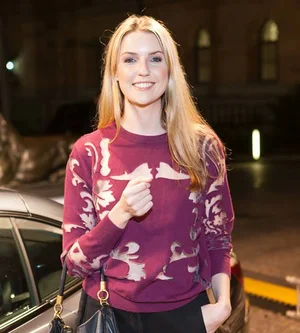
Rebecca Max is the Founder of Infinite Presence, a Melbourne-based business helping organisations create more mentally healthy workplaces. A registered meditation teacher, licensed Mental Health First Aid Instructor and former recruitment leader, Rebecca delivers training across mental health first aid, mindful leadership, corporate meditation, psychosocial awareness and suicide-prevention support, including her Mentally Healthy Leadership Collective program for leaders. She's also a mum of two boys who keep her, in her words, nice and busy.
You can find her here:
Full transcript
Danielle: Amazing. Rebecca, welcome to Spark TV.
Rebecca: Hello. Thank you for having me.
Danielle: It's so lovely to have you here. Are you having a nice start to the week?
Rebecca: I am having a nice start to the week, thank you. A little bit cold in Melbourne, but it's good. Thank you.
Danielle: Love it. I love it. Let's start out by telling everyone who you are and what you do.
Rebecca: All right. So, I'm Rebecca Max. I run my business called Infinite Presence, which is all around creating more mentally healthy workplaces. I'm also the mum of two boys. I have a 4-year-old and a 16-year-old, and they both keep me nice and busy.
Danielle: Oh my god, I can imagine. I've always been wildly fascinated with women in business that are mothers. I feel like if you have something that you need to get done, give it to a mum.
Rebecca: I hear that often from old bosses, and it's kind of true, because you have to learn how to juggle. But yeah, it keeps life interesting and joy-filled and stressful and busy and all the things, which we love.
Danielle: I feel like as business owners, we thrive on that kind of chaos.
Rebecca: True. Exactly right. We do.
Danielle: So good. So how did you actually get into business? So, I mean, this is quite niche, mentally healthy workplaces. I love it, and very important, but how did you get there?
Rebecca: Yeah, really good question. So the first chapter of my career was all working as part of people and culture teams, so in recruitment. And then I went through a stressful time in my life, and I discovered meditation, and I decided I wanted to go off and become a meditation teacher, which I did. And then some of my first clients were the recruitment clients that I was on-site recruiting for. And we started piloting some programs around meditation and stress management, and that went on really well for a good year or two. And I'd always been part-time, because I'm a working mum, and I started to scale that business on my days off. And then, after having my second son, I decided to jump into the business with both feet. But the business has changed a lot. So it started off as a workplace meditation business, and then, as part of running meditation sessions, and being a leader in recruitment, I had lots of discussions with people around struggles with mental health. So anxiety, depression, sleep, stress, all sorts of things. And I went off and did my own mental health first aid training, so I had a support toolkit that I could use when people were talking to me about their struggles, and that was awesome. And then I went off and became a mental health first aid instructor. And then the business has just morphed into all things mentally healthy workplaces. So whether that's neurodiversity and inclusion, whether it's leadership training, it's now all things that help people to feel good at work, but more importantly, support them when they're struggling. So that was a really long-winded answer to your question, but there you go.
Danielle: No, I love it. Because, again, I'm always fascinated by people's story arc, and I love that you said the business looks different today from when you first started, because I think that's the way... I mean, yes, a lot of us have a big vision for our business, and we want to build this empire, but I also think that it's when you get in the trenches, and you're working with your customers, and you're getting into the industry, that you really kind of figure out where the gaps are, and things do morph and evolve. So I always love to hear people's stories around that.
Rebecca: Yeah, it's definitely changed, and, you know, sometimes life feels like it's in alignment, and this feels like it's very well aligned, for what businesses are going through, the stress and pace of life for people, and where I can add some value. So yeah, definitely changing as we go.
Danielle: Do you think that that's changed? So, if you reflect on your time, I guess, in corporate, and then in business, and what you've seen over time, do you think it's changed? Do you think that we are struggling more, or do we just talk about it more? What's your vibe on where we're at?
Rebecca: It's a really good question. I think, look, we definitely talk about it more, which is awesome. I think that was one of the gifts of COVID, that leaders started to need to have different kinds of conversations with people. So it's not just about, how are you tracking with your work, and how are you tracking with your targets? It's, how are you coping with this pandemic, and how are your stress levels, and how's your mental health going? So I think that kind of opened a door to new conversations, which is great. But I think there are new stressors in the world. There are new stressors in the workplace. So, you know, AI. No one quite knows what that means yet. So we're leveraging it, we're using it, we're finding out how it can make our lives easier, but at the same time, we're hearing in the news that jobs are being slashed because AI is making things more efficient. So there are those new, unique stressors for people about, well, what does this mean for me? And I think, just with the world and the media and how accessible information is to people right now, I think that's a stressor we have today that I definitely didn't have as a child growing up. So I think, as the world continues to evolve and change, there is a lot more that people are consuming day in, day out. So lots more conversation about it, but also some different and more unique stressors, I think.
Danielle: Yeah. And I think that is interesting, your point around what we're consuming as well. We do live in this time where... I mean, it always makes me laugh, my husband's like a YouTube fanatic, but he watches a lot of news content, and so sometimes at night, you'll hear a negative story that's happening in the world, but he'll watch, like, 10 videos of different people's perspectives on it. And so I do think that we do get bombarded by what is going on in the whole world now, through social media.
Rebecca: Yeah, for sure. At least your husband is listening to multiple sources, so that's good. But probably not good just before bedtime. That's not how I would choose to consume it.
Danielle: No, it's terrible. I'm always like, no, we need Zen music, and, you know, I put on the virtual fireplace and listen to the rain, and he's like, no, I want to hear the news.
Rebecca: I like your version better. That sounds nicer to me. It's funny, there's a meme that's like, the two different personalities are always the ones that end up getting married.
Danielle: So true. It is funny. But no, I just think that is interesting. We do, I think, carry the weight of the world on our shoulders quite a lot more. And you can't separate that. As much as people, perhaps, maybe years ago, would say, leave home life at the door when you walk into work, I think that's really hard to do these days.
Rebecca: It's really hard to do these days. And look, there's legislation coming in now, right to disconnect and all that sort of thing, that's meant to be safeguarding your home time and things like that. But it is so much more integrated, isn't it? And that may be one of the curses of COVID and lockdown, that we all realised we can do our jobs, for the most part, remotely. And so then it's having to get really tough on boundaries for ourselves. Well, I'm at home, but I know I can just log on and check things. So what boundaries am I going to have in place for myself, to protect my energy that I actually need now, for myself, for my family, for my recovery time from work? So it's a whole new set of challenges. You're not so much leaving work at work anymore.
Danielle: Yeah. And I think, as a business owner as well, especially if you're a solo or small team and you are working from home, you're really in home life and work life all the time. I love your point about boundaries. What tips would you have for people who are, you know, either in the workplace, or maybe working from home, and really struggling a little bit?
Rebecca: Yeah, I think boundaries is something that I worked out I wasn't particularly good at, and I spent a lot of time working on it for myself. So whether it's speaking to my counsellor about it, or whether it's reading about it. But I've realised, the older I get, that I need to safeguard some of that energy for what matters most to me, which is my mental and physical health, and time with my kids and my partner and my family. So, look, tips are different for everyone. It's about knowing what you want to protect, first and foremost, and then having some buffers and strategies in place. So whether it's your out-of-office on, whether it's silencing your notifications after work, whether it is scheduling emails, just those little practical tips that can help you create a bit more space for yourself in life. But also things like switching off the news from time to time, and just connecting. You know, what can you do with that time instead? So instead of 30 minutes a day checking the news and having all that noise coming in, what could I do that is more intentional with that time and energy as well? So just filling up that cup as much as we can.
Danielle: Yeah. And I love that you use the word intentional. I really connect with that. I feel like it's so easy to just let the day slip away, and then the week slip away, and then it's Christmas, and we're going, oh my god, how did I get here?
Rebecca: That's right. That's right. You do have to be intentional about your time and how you spend it, because it just goes otherwise. And, you know, all the things we think of as downtime, and I'm guilty too, I love reality TV, I love all the crap on TV. But when you think about it, it's just a time suck. You're just wasting time, where really what I want to be doing is filling my mind with things that help me think differently, or reflecting on the beauty in life. So just finding some space in life for that sort of stuff as well.
Danielle: Yeah, I love that. I had a moment, I don't know, last week or the week before, where I was like, all my feeds are business content. You go on to Instagram, and it's almost like you go to Instagram for your escape, but all my people I follow are in business. And I was just feeling so flat, and I was like, you know what? I just need to look at pretty stuff. Like art, or fashion, or beauty, or stuff that's not work-related. But again, you've got to be intentional.
Rebecca: You do. I've intentionally started doing that with my feed, with the people that I follow. It's like, I want to see beautiful gardens, and I want to see beautiful holiday destinations, and I want to learn from people who can uplift me, whether it's in a spiritual realm or some other way. And what I need to cut out is all the doom and gloom in the world. So, it's not that it's being ignorant to it. It's absolutely happening. But I want to consume it when I want to consume it, not when it's fed to me.
Danielle: Yeah. And it's so interesting. So, my guilty pleasure is cooking videos.
Rebecca: Oh, nice.
Danielle: I can't cook, but I like to watch other people cook.
Rebecca: You might learn something one day.
Danielle: You never know. I save a lot with good intentions. But I did notice the other day, I must have clicked on something celebrity-related, but I just noticed how quickly my entire discovery page just moved to all celebrities, and I was like, what is this? Where's my food?
Rebecca: Exactly. I did the same. I mistakenly liked a post of a little kid approaching a biker, and then all the help the biker gave him, which was beautiful. But now my feed's full of it. I'm like, I'm not that interested.
Danielle: It was one time! Leave me alone, dude. I don't want to see it every day. Isn't it crazy?
Rebecca: It is.
Danielle: But yeah, that is the world that we live in. It's like, we want to keep your eyes on our screen. And if you don't have that self-awareness, it's so easy just to get trapped in that little... I guess that's why they call it the black hole of Instagram.
Rebecca: It is, exactly right. When really, like, I love to read, so I'd love to spend more time doing that, and I love to garden, and I want to spend more time doing that. So it's just shifting our focus from what's consuming our time unrelentingly, to being really present.
Danielle: I love it. I love it so much. It's so good. So what do you think has been one of your bigger challenges in business? So obviously you moved from corporate to running a gig. What was that transition like?
Rebecca: It was safe for me, because I did it with my business being the side hustle. So that was a really easy way to ease into it, still having the safety net of a paycheque, and I had the support of my leader at the time and what have you. And the more I talk to business owners now, the more I realise a lot of people do it that way. A lot of people just do it slowly, as their little side hustle. So that worked really well for me. Jumping into the business with both feet, during a pandemic, whilst having a child under one? Not for the faint-hearted. That was tricky. And learning to navigate working with the corporates, who sometimes like to pay on 60-day and 90-day terms. That's fun. Not.
Danielle: So funny, though. No one tells you that going into business. No one goes, oh, by the way, people won't pay you for the work you do on time.
Rebecca: No, that's right. So I think, you know, that mindset shift around no regular paycheque anymore. Times where you're at your peak, and you've got lots of stuff happening and lots of revenue flooding in, and then other times where it's, right, where does my focus need to be? And I think that's just the stuff that you only learn when you really do it.
Danielle: Yeah. And that's, I guess, why I love having these conversations as well, because it's everyone's experience. Everyone goes through that, and I think sometimes when it first happens, you're like, oh my god, did I stuff up here? Did I fail at business? It's like, no, this is almost a rite of passage. Going through the rollercoaster, the peaks and troughs of revenue, people not paying on time, cash flow. The moment you learn the word cash flow, it's like, what is this mystery?
Rebecca: Yep. And you work that out pretty quick, don't you? And then, not being afraid to fall back on what you know when you need it. So, when times were really tough, just at the start, during the pandemic, I needed to go back and do some part-time consulting in recruitment. And you know what? That's okay. So then it flipped: my business was the focus, and recruitment was the side hustle. And as a business owner, I say, just do what you need to do to get the business sustainable, and nothing's failure. Everything's a lesson.
Danielle: Yeah, I love that. It's really interesting, because I think sometimes, again, with the social media culture, there is a bit of a hustle, burn-the-boats, all-in kind of vibe. But for so many people, you're right, having that... calling your job your side gig, or whatever it is. It's not failure, and it's actually incredibly smart to give yourself some financial security.
Rebecca: That's right. That's it. And you do, and the more women I speak to, the more I realise, oh, lots of people do that. It's like this thing we don't talk about, but why not? At the end of the day, we've all got mortgages or rent to pay, and we all want to keep working on the businesses, and there will be peak times, and there will be times that are a little bit scarcer than they should be, and so you do what you need to do to support yourself.
Danielle: Yeah, I love that. There's a girl I follow, again, online, but she talks about having a portfolio career, and I love that idea. It's actually, yeah, you can design this life however you like, and if it means a little bit of consulting, or a couple of part-time days, plus the business, plus the this, plus the that: great, do it.
Rebecca: Exactly. It doesn't have to be the same path for everyone. We all get there in the end, right? You know what I get cross with? It's all these, "I can help you make a million dollars in your first three months of business" that we see online. Stop it, you know?
Danielle: Yes, I know.
Rebecca: Because it's a journey, and for most people, it has its ups and downs, and that's just normal, and they're the conversations we need to have.
Danielle: Yeah, exactly. And I think, too, any time I see the words passive income, I'm like, what business owner hasn't had to work for their money? It's so ridiculous. It's so rewarding, and it's also work. It just is what it is.
Rebecca: Yeah. Exactly.
Danielle: And it's like, when you do design a business that is centred around your passion, or your skills, or whatever, yes, it's work, and it's really freaking hard, but it means something, and you're creating an impact.
Rebecca: That's exactly right. And it's always bringing it back to purpose. And my business is very purpose-led. It's about changing stigma. It's about changing leadership practices. It's about supporting each other and having real conversations around mental health and wellbeing. My beautiful partner says to me every day, "Whose life are you changing today?" when I'm leaving home to go and do some training. Which is a beautiful way for him to remind me of my purpose every time I'm doing it. And I think a lot of being a business owner is mindset management. I think that's probably the biggest thing that you grapple with. Sales cycles can be long, sometimes they can be short, and it's just managing your mindset through all of that, and supporting yourself with the right people who can help you do that, I reckon, as well.
Danielle: Yeah, absolutely. I couldn't agree more. I think you can know the exact steps to take, and half the time it's just getting your brain to go, yes, take that action, actually do it.
Rebecca: That's right. Mindset's huge, isn't it? And we get in our own ways all the time, not doing the thing that we know we need to be doing, because we're tired, or it didn't work last time and we're having to do it again. But that's any job, right? We've all got things we just need to do. And once you do it, you feel so much better for it.
Danielle: It's so true. It's usually far less painful when you're out the other side. I always have that. I'm like, why didn't I do that three weeks ago? It took 20 minutes, instead of causing yourself all this anxiety limbo of, why haven't I done it yet, and then beating yourself up because of it.
Rebecca: Exactly.
Danielle: Now, you said my two favourite words: sales cycle. So talk to me about how you make sales in business. What do you do from a sales and marketing point of view to attract business?
Rebecca: Oh, such a good question. I feel a bit lucky that in the first part of my career, I was in recruitment, in an agency setting, for 14 years. So I was taught to do BD, the cold calls, the pounding the pavement, for want of a better term. But what I learned... and I was really reluctant to become a recruitment consultant, even though I had an HR degree and I was very people-focused, I was a little bit daunted by the whole budget and sales thing. But then, when I realised that it was all about relationships, that's when it shifted for me. And I've still got a lot of those relationships now. You know, CEOs and C-suite people from 20 years ago, that I'd be knocking on their door saying hi, we're still in touch, and we do business, in my business now, together today. Because it's all relationships, and that shifted it for me. But what I do in my business now: I leverage a lot of the networks and relationships that I already have. I'm a big coffee person. Let's sit down, let's chat about what's going on in your world, let me tell you what's going on in my world, let's see where we can add some value to each other. I am very much trying to get better at the social thing, the newsletter thing. Again, being a business owner, wearing five million different hats, that's new to me. Not so new anymore, but it certainly was at the start. And just showing up continuously, getting people to trust your brand. That's part of being a business owner.
Danielle: Yes, so true. And I just love when people have gotten to that stage where it is relationships, because I think sometimes the word sales really scares people. But it is just... I just say it's conversations. You know how to have a conversation with someone, therefore you know how to sell.
Rebecca: That's exactly right. And it's that self-belief in yourself as well, that you have something that's going to make a difference for that person. And it's not feeling bad if you don't have what they need at that moment. It's a not yet. And again, it's mindset, right? It's about, okay, they're not ready for what I have to offer yet, but they're happy to stay in touch. Let me stay in touch and keep having conversations and see where I can add value.
Danielle: Yes, exactly. And that is the really interesting thing about sales: you're right, a no isn't a no forever. It's just a not right now. So if you continue to treat people like good humans and add value, you're always surprised at how people come back around. Oh, now is the right time, and you're the person that's top of mind.
Rebecca: Exactly right. Look, I'm genuinely interested in people. I love to build relationships with people, whether there's a need or not. I'm just always grateful for a meeting, a referral, or, have you thought about this, or can I recommend you this book? Any way I can add value to them is what makes me really happy. And I think there's always that beautiful exchange of information and knowledge sharing in any interaction that you have.
Danielle: Yeah, absolutely. And it is true, we are humans, and by nature we talk to each other and share. So having a coffee with someone, even if it doesn't go somewhere, they might mention it to a friend or a colleague or someone. So you just never know where it goes.
Rebecca: You never know. And I just think, I always look for the commonality in people. What do I have in common with this person, or what can I learn from this person? And I think we've all got things that we can learn from each other, and grow from each other, and add some sort of value to each other.
Danielle: Oh, so good. I love it so much. I could talk to you all day, but I always love to wrap up these podcasts with one last piece of advice. So, reflecting on your time in business, what would be a piece of advice that you would give to another woman on her business journey?
Rebecca: Don't start in the middle of a pandemic. No, joking! What would I give as a piece of advice? I'd say, support yourself well with people who can really help you with your mindset. Actually, I think that's super crucial. And the other piece of advice I'd give is, don't do it alone. It can get a bit isolating, working by yourself. So go out and co-work. Go work in your local library. Support yourself with networks like this one, so that you feel well supported, both from a mindset and a community perspective. I reckon that's really important.
Danielle: Yeah, I couldn't agree more. On the days where things are hard, there is just nothing like, even if you don't talk about the issue that you're having, just talking to somebody and knowing that they get it, they get where you're at, and they get what you're going through, is just huge.
Rebecca: Yeah. I think it's cathartic to be part of a group of other business owners who can go, oh yeah, I've been there, and you're like, oh, what did you do in that scenario? And learn from each other.
Danielle: Exactly.
Rebecca: I think that's really important for mental health and wellbeing, actually.
Danielle: Amazing. Rebecca, thank you so much for sharing your story and your tips and your wisdom. Absolute pleasure having you on Spark TV.
Rebecca: It's been lovely speaking with you, Danielle. Thanks so much.