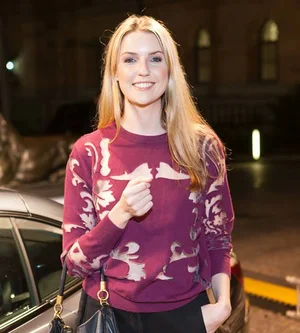
#awinewith Lisa Erhart
MEET Lisa Erhart, Founder of Funding4Growth.
You can find them here:
Transcript
Danielle Lewis (00:00):
You are listening to Spark tv, where we bring you daily interviews with real women in business at all stages. I'm your host, Danielle Lewis, and I am so grateful to have you here. So good. Lisa, we hit record. We're here. Welcome to Spark tv.
Lisa Erhart (00:17):
Thank you. Super excited to be here. Love what you've done. I know that you've been growing this community for years and you've really put your heart and soul into it, so it really is a privilege to be here, to be chatting to you and talking to all the women that you've been supporting for all of this time. So thank you. Oh, I'm a bit emotional already.
Danielle Lewis (00:45):
What the heck? You and I. So we favor on listening. We've just been ranting about business for the last 10 minutes, and now you come out with these beautiful words. I'm like, what the heck? This is gorgeous. Well, it's true. Made by day. You've given me therapy and then kindness. This is so, I
Lisa Erhart (01:04):
Dunno if you remember, we'd met God when I was working at River City Labs with Peter. Oh, that would've been 20 16, 20 17. I think you had just started super early in my journey. Yes, yes, that's right.
Danielle Lewis (01:20):
Yeah.
Lisa Erhart (01:21):
How
Danielle Lewis (01:21):
Funny is that? It just feels like a lifetime ago.
Lisa Erhart (01:26):
Well, 10 years next year. What the
Danielle Lewis (01:29):
Actual Yeah, exactly. It's so funny because I know we live in this world where you want everything to happen today. I have an idea and I'm like, I want to sell a billion dollars of that today. And it's like you kind of have to readjust to thinking in year long, decade long timelines, and that really sucks going into that, but 10 years goes so quickly. It's in rage.
Lisa Erhart (01:57):
Absolutely does. Because I must admit it was at my time at River City Labs and just seeing the number of men coming through the accelerated program, the number of men sitting in the co-working space, the tech industry at that time, if you saw a woman sort of walk in the door, it was just like, and I can remember at that time just supporting some of the, I was mainly at that time supporting the ecosystem enablers and builders with funding, making sure that they were tapping into all of the available Australian or Queensland government funding. So I worked with River City Labs, I worked with Split Spaces. I've worked with Christine out in Longreach. I've worked with all of these amazing people building this ecosystem. And then at the same time was also supporting some of the startups in the coworking space and in the accelerator. And it was amazing to me, even in the grant space,
(03:14):
The number of male led businesses that were getting funded. And then I was lucky enough to also join different funding programs as an assessor. So sat on multiple assessment committees and because I love data was capturing all of the relevant details that I was interested in. So kept account of how many women applications that I assessed, and then subsequently how many got funded. And we would only receive about 20% of all applications. Women probably less than that actually, because that was just my pool. And then I was still seeing that of that still only one or 2% were getting funded. So the stats that we see in the venture capital world for me were replicated in the grant space. And now to preface that, it was programs that were open, it was technology, it was innovation, it was not, it was not social enterprise. It was commercial businesses looking for grant funding or government support to commercialize and grow. So side by side to the VC funding space. But again, one to two fucking percent, it's just
Danielle Lewis (04:48):
Like, why do you think it is? Do you think it's because there's not enough female businesses in that industry? Or do you think it's because women don't throw their hat in the ring?
Lisa Erhart (04:59):
It's probably a little bit of both. Now, what I'm seeing is that with the rise of support for ecosystem enablers, so for groups like Tech Ready Women for the universities that have had female founded programs, like UNSW have got the WAVE program, the work of Launch Victoria and the work that they've done with the Alice Anderson fund, I think some of those enablers have really helped to lift some of the opportunities for women to think about what they're doing from a technical perspective. So of course, because this is stem, this is tech innovation, and it really opened the way for women who had a thought for an app or thought, well, I do this and from a process perspective, and I wonder if we can apply a technology overlay to that. So we've definitely started seeing more women come into this space and it's then through those programs that they better understand the commercialization process. And I think that's been a real problem area for women. And let's face it, we've had generations where we've been locked out of business, we've been locked out of funding. And let's face it, I'm old enough that when I went to apply for my first credit card, I couldn't do that. I had to have my dad as guarantor.
(06:41):
So it's in my lifetime that even the banking industry had shut the door was shut for us. So we've got a long way to catch up. So in that things like commercialization, we just didn't have the language. We are not taught it. We don't understand the terminology, we don't understand the process. So there's been a real catch up. And I think because we are so smart, we've caught up very fucking quickly and now we're here going, okay, now choose us too. But of course, there's still other systemic issues that we need to be dealing with.
Danielle Lewis (07:34):
And I think that that's kind of, and it's interesting. So I come from the vintage of, so I was the lone woman walking into the River City lab. Yeah, you were working event, you were, it was like, who's this? But I mean, it's funny. I don't know what it is about me, but I'm pretty oblivious. I just think I can do anything, which bodes very well for me. But where I found issue was certainly through my hat in the ring for things. And then I only add through that process, realized I guess some of the discrimination that did happen with women when it came to investment and grant funding. I mean, what really did it for me was, I think it was federal government. There was a female founder grant, which has since been discontinued, but basically where I was at in my business, it was going to be perfect, but we had too many male shareholders, so I got rejected. We were too male. Like so even as a female founder, you are making it prohibitive for a female founder to get access to female founder funding because of other elements, because of a tick box.
(08:50):
And I think that's where the seed got planted for the Spark Women in Business grants. But it's so funny because so many women come to me and say stuff like that. They're like, oh, well, we can't apply for all of these programs, so I assume we can't apply for yours. And I'm like, no, that's why we invented Spark. Because I was pissed off with all of that
Lisa Erhart (09:12):
Stuff,
Danielle Lewis (09:13):
And I was like, you don't have to be tech. You don't have to be majority female. You don't have to be X, Y, Z. It's like get more money in the hands of
Lisa Erhart (09:23):
Women. Yeah, correct, correct. I put together a proposal. I've called it the 3 6 5 initiative because if we can move the needle by three to 5%, we can open up to $6 billion worth of immediate economic potential in Australia. Holy shit. And if we open up the opportunity and make it more fair, we have an opportunity to open up 128 billion in Australia alone.
Danielle Lewis (10:09):
And
Lisa Erhart (10:09):
Here we are. We've got the Australian treasurer. So Mr. Charmers talking this week. Oh, I think we need to do tax reform because we've got some productivity issues. Like productivity is flattening and decreasing a little bit. It's just like, have I got an idea for You can make an impact. Yes, exactly. Exactly. So I've been sending this, I've sent it out to multiple Australian ministers, I've sent it to all the states, and I've gone, you know what? We need a program that stops discriminating against women because they don't have tech businesses. Sure, let's support women in tech. But you also need to understand that just across the board, women do more with the funding that you give them. They turn that into another 78 cents for every dollar that you give them. They employ more people and oftentimes women or other disadvantaged people in the community. And then once they're on a role, those businesses are around for a long time and they build then generational wealth. And it's just like, what more can you
Danielle Lewis (11:39):
Want? I know, and it's like every business can't be a fucking tech business. Correct. It can't all be a piece of software. You think about everything that's in the room around you now. Sure, we're on laptops doing the tech stuff, but there's just so many things to our life that we consume and that we need and that we rely on in our day to day. And all of that is important. And all of that contributes to exactly what you said, the economy, employment. And there's a stat as well around when women do well in their businesses, they often give back more into their communities. Correct, correct. None of it's bad. None of it's bad.
Lisa Erhart (12:22):
Yes, exactly. Exactly. So I'm currently reworking that proposal and creating a blueprint this time and sending it back out and saying, well, this productivity issue that you think that you have in Australia, let's move forward with this little idea.
Danielle Lewis (12:42):
Yeah, I think it's incredible. And I'm just sitting here thinking, good on you. Do you know how many people whinge about the state of circumstances and never do anything about it? I just love that you have had a career watching things unfold and you're like, Nope, we can do better.
Lisa Erhart (13:04):
Yeah, we can. Yes, we absolutely can
Danielle Lewis (13:10):
Do. We haven't even introduced who you are or what you do. So let's just put a little pin here and tell everyone who you are and what you do, what your business is.
Lisa Erhart (13:22):
Okay. For those who haven't met me, my name is Lisa. Lisa Earhart. I am the founder of Funding for Growth. It is a community of female founders looking for funding to grow their businesses. I work with these women specifically around sort of education and capability building, and I'm actually building some tech. So I have an AI powered assessment tool called Assessment iq, where you can upload your grant application and have it pre-assessed before you submit so that you get some feedback. I don't know about you, Danielle, but I have definitely been one of those people who have submitted applications. It was unsuccessful, never got any feedback, thought I was a shoe in, and I speak to hundreds of women and they all say the same. And it's just like, so I've built a tool that will give you some detailed feedback. It provides this beautiful evaluation report. It highlights the strengths of your businesses, the strengths in your application. It highlights any gaps and makes recommendations for improvement.
Danielle Lewis (14:41):
That's so good. I love that. And
Lisa Erhart (14:44):
I love it too.
Danielle Lewis (14:45):
Yeah, of course. I can tell by the first 15 minutes that you're very passionate about this, but it's so cool because you're spot on. It's the exact feedback I would give people. It's the exact feedback people say to me is they're like, I've applied for 10 grants this year and I didn't get any of them, and I have no idea. And people I really hanging out to know. Correct. And the period of time as well, how long it takes for grants to be assessed and all that. There's just so many issues.
Lisa Erhart (15:19):
I've got an idea for that too. Oh my God. Tell me.
Danielle Lewis (15:23):
Not yet. Or is that a secret squirrel coming soon? It
Lisa Erhart (15:26):
Is. I'm working on, I'm working on that one. Oh my God,
Danielle Lewis (15:29):
That is so good.
Lisa Erhart (15:30):
But it's true. So I met with Jane this week. Jane has got this amazing social enterprise. She works with disadvantaged youth. She's doing some really great thing with re-engaging these young people, helping to build their confidence again, giving them some skills, helping them to feel like they've got the ability to make a positive contribution. She has applied for 80 different grants and has only received three.
Danielle Lewis (16:10):
Holy crap. That is not great odds.
Lisa Erhart (16:12):
And she writes really well, I've assessed some. She's got data, there's validation, and it's just like, what the fuck is going on here? So we are doing a deep dive into some of that to really pinpoint what's going on. Can I talk about my book?
Danielle Lewis (16:33):
Oh, please, please. This book. Oh my God. That's gorgeous too. Did you self-publish or is this published by? Yes. Oh my God, that looks gorgeous.
Lisa Erhart (16:45):
Oh, I did pay someone to do the design for me. So Hazel, Hazel, Hazel's amazing. So Hazel, oh God, what was it called? The Flowers, the Lost Flowers of something. Yeah, I'll send it to you. We'll put it in the show notes or in the show notes. It was a book and it turned into a series on streaming. And so I found the designer of that and said, would you be open to, and she went, yes, of course. So yeah, so she did all of the insight for me as well. Wow. So for those who have maybe applied once or twice or maybe haven't even applied for any grant funding yet,
Danielle Lewis (17:33):
It's
Lisa Erhart (17:34):
An excellent first step. It deep dives into the boosting Female Founders grant as an opportunity. And so you can download the sample application, you can download the guidelines, you can follow along. I'll explain what all of the guidelines and eligibility criteria is. I even go into an assessment process and share one of the assessment scoring processes. So yeah, it's a book that you do rather than a book that you read.
Danielle Lewis (18:09):
That's so cool. And it's called Advanced Grant Writing for Female Founders. I'll put a link to that in the show notes as well. That's so good because it's so true. I always looked at grants as this some kind of cryptic mystery art form slash science form that I just didn't have. I was like, I can build a business. I can create something that people need and sell it to people, but for some reason, I can't convince someone to give me money for that when they're in
Lisa Erhart (18:38):
Government. Yeah, it's wild. So I talk a little bit about looking at your application from a funder's perspective, stepping into the shoes of an assessor because it helps to then lift up and take a more objective look, not only at your application, but also at your business. Because one of the things I love about grant applications, because I'm a bit weird, is they'll always bring to the surface potential weaknesses in your business. Maybe things in the back of your mind that you keep thinking, oh God, I really should learn about that, or I should explore that, or I should do that research, or I should, I should, I should. And it's not until you are typing away and all of a sudden it's just like, oh fuck. If I had have done that six months ago when I thought about doing it, I would then have the data to be able to put into here. I would've had some surveys, I would've done some interviews, I would have the evidence that it's asking for, and I didn't. But you know what? Today's a new day
Danielle Lewis (19:53):
And do you know what that is one of the benefits I think of applying. So yes, the money's great, but I am always blown away by the comments I get from female founders that were like, I was on a roll. So because I applied for that grant, I sent off a proposal or I did that thing. I just suddenly had this momentum and confidence, and it's like once I grant application's in, who knows if you're going to get it or not. So I was like, why don't you leverage that confidence? And to your point, what are the things that it brought to the surface that I don't have yet in my business? And it's almost like I don't like business plans as such. You download the template off some website, but one thing I do love is the fact that it forces you to think about your business in ways that you don't. Because you get stuck in your to-do list. It elevates you to that strategic level. And I think we have a hard time doing that as founders because we're wearing all of the goddamn hats.
Lisa Erhart (20:58):
100%. And as women, you're also there oftentimes as principal carer or there's so many other things that you're doing as well. God forbid you have an actual life. I know. Seriously. Seriously. My
Danielle Lewis (21:15):
God.
Lisa Erhart (21:16):
So I have to say at different times, we all do with our businesses, you sort of go through into the valley and you go, what the fuck am I doing here? Is this really helping people? And it's amazing then how the universe then just puts people back in your path that maybe that you helped some years ago, and then you see how they've then just flourished after that and you go, okay, yes, I'm here and I'm serving as I'm meant to serve. And yeah, I just think once women really hit their stride in this commercial space, we're going to see a very, very different world.
Danielle Lewis (22:02):
And you just planted a little seed in my mind then as well. I think about, I obviously I've been in multiple businesses about 14 years, and every day I'm on the rollercoaster still. But it's funny, when someone says something, really, someone will just reply randomly to an email and say some nice words. And just when you were talking about when someone crops up and you're like, oh, I helped them. It just makes me think if anyone's ever helped you fucking tell them, tell them. Because they're probably having a bad day and they probably want to quit their business. So if they've been helpful, just reach out and tell them they're doing a good job. We need more pats on the back as female founders.
Lisa Erhart (22:47):
Yeah, we do. We do. And not from a place of ego, but just from a place of, no, it's hard. This is hard. It's just a reminder that yes, what we are doing here has meaning and can achieve what it's here to achieve.
Danielle Lewis (23:10):
So how have you found going from living in this world, building this ecosystem, seeing this problem, but now you are a tech founder. I know. How have you found going into being a tech founder?
Lisa Erhart (23:27):
It's really weird, and this is the part that actually pisses me off a little bit. The amount of funding that's available for you as a tech founder is just wild. So I launched funding for Growth in 2020, and I have applied for multiple different funding, I guess opportunities over the last, let's say five years. And I have not received anything for funding, for growth and for the work that I've done in helping to build capability and educate and for whatever reason. And it's just like, oh, well, obviously not meant to be
Danielle Lewis (24:23):
And wide old considering if anyone you think you know how to write the applications for success, right? You are an assessor, you know what they want.
Lisa Erhart (24:35):
Correct. And the frustrating part also is that I prepare bloody good applications and I've had feedback come back to me, say, your application just compared to everybody, but we couldn't give it to you because we actually were focusing on this, this, and this, and you just didn't. And it's just like, well put that in the fucking guidelines. Don't waste my time. Totally. And because I'm not applying for 20 grand, I'm applying for 200 grand. So
(25:14):
It's a big application with lots of partners. It's a consortium sort of bid, and then it's just like, well, don't put it in the guidelines and don't waste my time. Totally. So I get a bit shitty with that. But back to your question, since I've started developing the technology and I've just gone, you know what, I'm just going to apply for that. And it's just like, wow, that was easy. I'm just going to apply for that. That was easier than I thought. So it's amazing how much more is available. But yeah, let's see. Interesting. Let's see. So
Danielle Lewis (26:01):
Interesting. And what about from a non-grant perspective? How have you gone? So I have a love hate relationship with technology. I love it because I think it's powerful, can solve problems. It's scalable, love the business model. Can't fucking ever have luck with developers. Everything
Lisa Erhart (26:24):
Else
Danielle Lewis (26:25):
Wrong managing. It just does my head in a decade later. I haven't learned a goddamn thing in a decade apparently,
Lisa Erhart (26:34):
I have to say. So I've also, so after my time at River City Labs, I also went consulting with corporations and helping to deliver large scale technical projects within large companies. So I have to say, and when I started that I didn't, I dunno how I got the first job, but I did. And it was one of those sort of situations where I got paid to learn. Not that anybody else didn't know what I was doing. Well probably they did, but they were kind enough not to say, but I learned it was really important to just embed myself into that space because I had seen how people were being taken advantage of by development companies. And even today, not today, but I had a recent conversation with a woman who had paid $250,000 for an app and it still wasn't even ready for some external be a users
Danielle Lewis (27:55):
And they,
Lisa Erhart (27:58):
They were asking her for another 80 grand before it could, and it was just like, oh my. But you know what? We have so many opportunities today with vibe coding. There are platforms and tools now, but again though, it's another thing that needs your attention, your focus, your time.
Danielle Lewis (28:19):
But
Lisa Erhart (28:20):
If you're in any way interested though, I would be just testing some of the new platforms. Is it rep? Yeah, actually, you can just talk to you to chat GPT. You can say, well, this is who I am, this is my experience, this is what I want to do. I think an app that does this and this, and this would be really helpful. And it goes
Danielle Lewis (28:47):
Here, test this. I've actually used one of those for a ui, so not for the actual backend coding, but to give wire frames to a developer, and they picked out the code and the designs from this AI bot and used that to basically accelerate the process. So that is actually very cool. I love that.
Lisa Erhart (29:09):
Yeah. I think, and this again, for any women that have a little interest in tech who maybe the ones that know how to use all the iPhone have got all the apps. Anybody who's just got a natural inclination or interest in that area, I would 100% be encouraging anybody to ask chatt BT first if you want, let it recommend the types of platforms to test and use. And I would just be giving it a go. Even Steven Bartlett talks about his girlfriend. She does breath work or something like that, and she used Rept to create this app and put it on the store and is selling access. It's wonderful. It's wonderful.
Danielle Lewis (30:10):
It's so cool, isn't it? Yeah. Oh my God, I love it. This has been so good. I could literally just talk to you all day, but I always love to wrap up these podcasts with one last piece of advice. So reflecting on your time in business, what would be a piece of advice that you would give to another woman on her business journey?
Lisa Erhart (30:38):
I think being, we're often overcritical of ourselves all the time, and so I want to preface what I'm saying here with this is not an opportunity to beat yourself up. And this is why I focus on it a little bit in the book about being more objective. So taking a step back and having a look at your business. So there's one, I really dislike it when women refer to their business as their baby, it's not,
Danielle Lewis (31:15):
Oh, yes,
Lisa Erhart (31:16):
Yep. It's not. It has its own energy, it has its own personality. Yes, all of that. But it's not your baby. It's something that you need to step away from and take a more objective view to it and acknowledge where you have some opportunities for additional education, potentially things that you don't properly understand. So things like the commercialization roadmap or product development roadmap, or if you hear terminology and you're going, what the fuck is that? Take a moment and educate yourself and then step back into the arena with a different mindset and get a bit punchy sometimes.
Danielle Lewis (32:09):
Oh my God, that's the best advice ever. I love it. You are absolutely incredible. Lisa, I have so enjoyed talking to you this morning. Been great. Thank you. Thank you so much for sharing your journey with us and the smart community.
Lisa Erhart (32:25):
It's my pleasure. I am, as I said at the beginning, I am super grateful to be part of any ecosystem where there are women in business with vision and doing what they can to not only make a living, but potentially build generational wealth. We're all here to leave a legacy, so I love being part of that energy. It's fabulous. So thank you for building the container so that we can function within it.
Danielle Lewis (33:00):
Well, I love having your energy here. So this is mutual love going on love. Yes. Yes. That wraps another episode of Spark tv. Shout out to Spark TV sponsor IP Australia for their amazing support of the Spark Podcast and women in business. And if no one tells you today, you've got this.
✨ Thank you to IP Australia for supporting the SPARK podcast and women in business ✨