✨ Thank you to IP Australia for supporting the SPARK podcast and women in business ✨
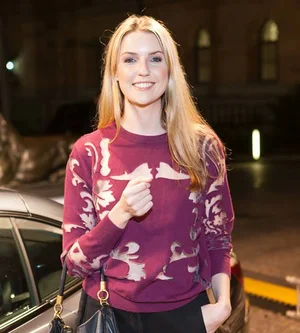
Fi Mims has been a photographer for 23 years, and a lightbulb moment in London's National Portrait Gallery started it all. Now a business coach and personal branding photographer for women in business over 40, she helps them build brands that are profitable and sustainable in their season of life. In this episode she covers where personal branding actually starts (not the photos), the three types of content every business needs, why authenticity is your biggest advantage in the AI era, and designing your business around the life you want.
Why build a business just for women over 40?
Because the season of life changes everything. At 52, Fi knows the juggle her clients are living: shifting energy, aging parents, teenagers, health, and businesses that still demand everything. "In your 40s and 50s, we should be at the stage where we're really able to enjoy our businesses, and we're not still stressing about showing up on social media, bringing in enough clients, am I charging enough?" She works with women who get that, because a coach who understands your challenges beats one who can show you viral reels.
Where does a personal brand actually start? (Not the photos)
Fi's answer starts well before the camera comes out: your why, your values, your ideal client, and the transformation you want to deliver. "At the end of the day, it's about shaping people's perspectives of you. If you don't create your personal brand, other people will do it for you." And no, it doesn't mean sharing your breakfast or your arguments. It means knowing how you want to show up in the world, so every photo, post and email decision becomes easier. In a market flooded with AI content, she says authenticity is the fastest cut-through there is.
The only three types of content you need
For anyone whose head is scattered on social media, Fi keeps it to three pillars: authority content that shows your expertise and results, personal brand content that makes you relatable and human, and promotional content that actually invites people to work with you (the one everybody skips). Show up consistently across those three and you're covered. Her other rule: "We have to get better at just showing up a little bit imperfectly, which is generally close to perfect anyway." Even Danielle admits the overthought posts never perform as well as the imperfect ones.
Get help before you burn out
Fi built a successful photography business, then nearly burned out running it, and she sees the same pattern everywhere: "Women tend to wait way too long to get that support. They're trying to do everything themselves, and it just hurts you in the long run. It keeps you stuck." Her fixes: an online business manager she's had for years, Upwork editors for her shoots, proper job descriptions and training videos for every hire, and a fortnightly cleaner so weekends belong to her family again. Without outsourcing, she says, there'd be no membership, no program, no mastermind.
Fi's one piece of advice for women in business
"Have a think about the lifestyle you want alongside your business, because it's one thing to build a successful business, but often it's at the expense of our time outside of work, time with friends and family. So think about the lifestyle you want to create, and just design your business around that. It might take 6 months, 12 months, 2 years, 5 years, just work your way towards that, and continually have that long-term vision. Because when you get to 50, it's more about, well, how much do I want to actually be working? It has to be wound around the life you want to live."
Meet Fi, Founder of Fi Mims Photography
Fi Mims is a business coach and award-winning personal branding photographer based in Melbourne, helping women in business over 40 go from invisible to in-demand. A photographer for 23 years, she combines personal branding shoots with business coaching through her Shine Bright mastermind, a six-month container for women ready to boost their visibility, increase their impact and turn purpose into profit, all while building businesses that fit their season of life.
You can find her here:
Full transcript
Danielle: Amazing! Fi, welcome to Spark TV! I'm so happy to have you here!
Fi: I think it's my first time on TV.
Danielle: Oh my god, yes! I'm so honoured that you are doing it with us.
Fi: Who, me? I've been waiting for this for a while, been very excited, and excited to meet you as close to in person as I can get.
Danielle: I know, it's so good, isn't it? Oh, let's start out by telling everybody who you are and what you do.
Fi: Okay, so I am a business coach and personal branding photographer, and I work with women predominantly in the 40-plus space these days, in service-based businesses, helping them to build powerful brands and show up and increase their visibility, so that they can build businesses that are not just profitable, but also sustainable in their season of life.
Danielle: I love this so much, and now I've got so many questions to ask you, but something just sparked a little something in my brain, because I turned 40 last year. What's with the move to servicing us more mature ladies?
Fi: Yeah, no, it's a good question, right? Look, I'm 52 myself, so I'm a bit further down the journey than you are, but I do believe that there's two things. One is that, look, I've felt this more as I've turned 50 than when I turned 40, but your energy does shift, and I consider myself a very energetic, fit person for my age. But your body needs to rest more at this age, and when you're in a one-to-one service-based business, and as a photographer... I've been a photographer for 23 years, but mostly in that personal branding space with women for the last, I would say, 15 to 20, it's labour intensive. And I adore it, I love it, I'm passionate about it, but it's labour intensive, and I used to shoot 3 or 4 days in a row a week. Whereas these days, it's one shoot a day, or two shoots a day, twice a week. My body needs to reset more in between. You need that rest. So that's one aspect of it. And the other aspect, which probably plays into that, is that we are juggling quite specific, multiple responsibilities that we're not in our 20s or 30s. So, personally, I have aging parents, both with different forms of dementia, in aged care. I've got teenage twins that are 16. I've got a husband with some health issues, which means we sort of have to structure our life a certain way. And then, of course, there's your own health, which we just talked about a little bit before we started recording. Managing your own lifestyle, your friends, making sure that you fill your own cup, so to speak. I think women at our age, we're juggling all that, and we're getting older, and often, for my clients, they're still not backing themselves as much in business. And at this age, we should be actually thinking long-term. In your 40s and 50s, we should be at the stage where we're really able to enjoy our businesses, and we're not still stressing about showing up on social media, bringing in enough clients, am I charging enough? But a lot of us are still struggling with those challenges. So I feel like I can very much relate to the women I work with, and they have specific challenges, specific mindsets, specific messaging going on in their heads. So that's why I love working with this niche, yeah.
Danielle: I love it so much. And look, the reason I asked was because I said to my husband a few months back, I was like, you know, I'm noticing on my Spark calls a certain vintage of member that I'm now attracting. And he's like, yes, darling, you're not 20 anymore. And I'm like, what? When did that happen? And he's like, you've probably grown to attract people that are like you, and think like you, and look like you, and all the things. And I was like, oh, wow, there you go. When did all of that happen? But, yeah, I really find that interesting, and I love that you said you can relate to the things that your clients are going through, because doesn't that make sense, right? We do tend to create businesses that solve something we're going through as well.
Fi: Yeah, I think, like, if I, for example, wanted to coach with someone, maybe there'd be a reason I'd coach with a 20-something who's shown me how to do viral reels on Instagram, right? But in a more deeper sense, I would be wanting to work with someone that gets me, that understands my challenges, that I'm not sitting there the whole time going, well, she doesn't understand all the things I've got going on in my life. And likewise with photography, coaching women from behind the camera, understanding how they feel about their body, their face, their wrinkles at that age, and that they can still show up in an amazing way. I think it's just nice to have someone that... I mean, it's about personal branding, right? Relating to your people.
Danielle: Ugh, I love this so much. So, how did you even get into all of this? You mentioned being a photographer for over 20 years, which is incredible, but how has the journey unfolded for you?
Fi: Well, a lot of photographers start out by being handed down a box brownie or a camera by their dad or their granddad, and that was definitely not me. I went right through to an arts degree in uni, having no idea what I wanted to do. And after university, I went to London for a couple of years, as a lot of us Aussies do, right? To have a bit of fun and make some money and travel. And whilst I was there, I went to the National Portrait Gallery, and I had, like, a lightbulb moment, where I was looking at these large-scale, close-up portraits of people on the walls. And I've never really had a creative leaning in my life, I would say, but I was just looking at these going, I would love to be able to do something like that, to work specifically with people, taking photos of them. And I think so much in life, we know what we don't want to do, and we know what we do want to do, and at that point, I was just like, I just want to do something that I love, and that brings me joy, and that brings the people I work with joy. And I talked about it for a long time, but it was all those little imposter syndrome things in my head over a few years, going, oh, who are you to think you could be a photographer? You're not even creative, yadda yadda yadda. And eventually, a guy I was dating for a while gave me a brochure for a Melbourne camera club and said, would you just go and do something about it? So, I went, I did a short course.
Danielle: Thank you to that guy!
Fi: Yes, worth the relationship. I went through a short course, and then I signed up to a two-year course. I ended up working with one of my tutors in her wedding photography studio. So I started out, and through that, I had a regular part-time desk job for about seven years that I was in with a business. And then there came a point where I needed to leave that job and do something different, and I was engaged at the time. And it was like, do I find another desk job in corporate, or do I go for the dream? And my husband, or fiance, was like, if you want to do it, I'll support you. So that was it. I launched my own photography business, I did that for 10 years, then I had my kids, and I went, right, I'm not doing weekends anymore. So I went into business photography, and very quickly became passionate about working with women in business. So it just evolved from business photography, because it was just before personal branding started to be a thing, into women in business, and probably just in the last 3 to 4 years, women 40 plus in business.
Danielle: It's so interesting, isn't it? I love this story as well, because it feels like the evolution of your business happened in seasons of your life. And, you know, I guess going back to the age conversation, sometimes there's this rhetoric that you need to have a plan, have it all figured out. It's kind of like you come out of the womb knowing what your business idea is, and just hustle from there. But it really does change and evolve over time, and I love that you've connected to that niche of women in business, because their life is changing, and their business is changing. And when you think about personal brand, it's so difficult when you're going through this time of change, and all of these things around you, to actually know, well, what the hell is my personal brand anyway anymore?
Fi: Yeah, because that evolves just like we do, absolutely. It's not a set and forget, so I love doing that work now. And also, a lot of people go through business 10, 20 years, and they think they know their personal brand, but they've never actually done that work on paper. So I get to evolve it with them, and they get lost in the nuts and bolts of their business, and forget about those foundations, which are so crucial. And I suppose that's where my business coaching comes in. And actually, I didn't really talk about that in my journey, but pre-COVID, I had been wanting to move into more of a mentoring, coaching space, looking at what everyone else was doing online with courses and programs, and going, I want to do that, but I don't have time. And then COVID hit, so I was like, I have time!
Danielle: Oh god, I've got time!
Fi: So, I launched a membership then, and that ran for 5 years, and I only closed it last year because I just had run out of capacity. I'd also run a group program for a few years from 2023, and two years ago, I launched my mastermind, and that is now where I do my coaching, with the same women in business. So, the women who would come to me for photography are also in my same niche for my mastermind, my business coaching. And again, like you said, that's because of my season of life. I'm not doing it only because I need to slow down and allow my body to rest more, but I'm like, look, long-term, what do I want to do? I definitely would like to not have to do 20 shoots a month for the rest of my life. I'll burn out and die. But also, I think for a long time, as a photographer, I would see women walk away with beautiful images, and some of them were brilliant at using them, some of them weren't, and I knew that there was a lot more work that still needed to be done. And as a personal branding photographer, I was really passionate about the personal branding side of things, so that was what led me down that coaching path. I just want to work with women around visibility in a much deeper way, because as you would know, it goes much deeper than just having some nice photos taken.
Danielle: Oh my god, totally, it does. And I love that you mention that some people walk away and absolutely use them, and others go, oh my god, I can't look at that wrinkle on my face, or look at that, and then just totally implode. If you're speaking to someone listening today, and they're kind of in that moment of, I don't know who I am anymore, and I do need to reinvigorate my personal brand, what should we be starting to think about if we need to evolve our own personal brands?
Fi: Well, the best place to start is with those really foundational elements of returning to your why behind your business. So, why are you doing what you're doing? What is it that drives you to get up every day? What do you love about it? How does it fill your cup, or maybe not fill your cup anymore? And then, because my program I ran for a few years was on personal branding, and those first lessons or modules we would work through were your why, and things like your values. What are your values, and how do you want them to show up in your life and in your business? But then, probably more specifically, well, who do you want to work with? If you had an ideal client in your mind, who do you want to work with? What do you want them to sound like, be like, look like? What's that transformation you want to be helping them with? And I think in going through all those foundational pieces, you're figuring out... I mean, really, it's about finding out what makes you happy, right? And then along with that comes that positioning piece, which, you know, we're talking about it at a very strategic level, but at the end of the day, it's reflecting who we are inside. How do I want to show up in the world? How do I want people to see me? And therefore make sure I'm attracting the people that are going to fill my cup, and I'm going to be able to help them create an impact, in my own way, in their world.
Danielle: And I love that you explained it like that, because I think oftentimes when people think personal brand, they kind of think influencer, social media, I've got to show up and show you what I'm eating for breakfast, lunch, and dinner, and disclose every moment of my life. But realistically, I love the phrase you used: how do you want to show up in the world, and who do you want to attract? And I think, yes, while this does need to be very human and make us happy, it can be quite strategic, and no, we don't have to show everyone our breakfast or the fights that we're having with our husband or children, you know? It is more about, what do I do in this world? Who do I serve, and how do I connect with them more deeply?
Fi: Yeah. I mean, at the end of the day, it's about shaping people's perspectives of you, isn't it? And there's a famous quote somewhere around, if you don't create your personal brand, other people will do it for you. I think we have to know what makes us tick, and how we want to move through life, and the legacy we want to leave behind. And that really formulates how we want to show up in the world right now, and what makes us happy, yeah.
Danielle: Yeah, and I think defining that just makes things so much easier. If you do know who you are, and what you're about, and how you want to show up, it helps make the decisions. So, okay, well, what social content am I putting out, or what email am I writing, or what does my website look like, or what do my personal branding photos look like? If I know all of these foundational answers, it makes all of those decisions so much clearer and easier.
Fi: Yeah, and from a business perspective, it does attract our tribe, right? Danielle, like, with your membership, that's what drew me to you. You get a sense of your energy through your photos, which was the only way I could come to know you when I found you online. And, you know, the "a wine with" Danny podcast, I'm like, she's my kind of woman, right?
Danielle: Which also, I have to share with you, is hilarious, because I have had, lately, a person say, all of your photos are drinking wine, and that's just ridiculous. Can you just get a little bit more real? And I was like, well, if you know me, you know that that's about as real as it gets. But so interesting, she is not my people, you know? And yeah, the right people come into your world, and what you do put out does attract different types of people.
Fi: They do, right? And if you try to hide that, because you're like, oh, I don't want to turn away the people that don't want me to drink, or don't like people who drink, then... yeah, that wouldn't be right. And I know a marketing coach who says, you want people to have a hard yes or a hard no as soon as they meet you, or see you, or find your website. And it's such great advice, because, talking about personal brands, and this is really pertinent to today's market, the more authentic we can be, the quicker the cut-through, right? Particularly with all this AI stuff going on, and it's becoming so much harder to connect with people and to build that trust. So the best way to build trust is through showing up as your true self, through talking as your true self. And if you want to drink a wine every time you jump on a podcast...
Danielle: Maybe I do. You know?
Fi: You know, but that's... you want your people, because they're the ones that are going to make you happy as well, so, yeah.
Danielle: Yeah, it's so true, I love that. And so then, my guess is, for the people listening who are like, okay, this sounds great, but I need a little help, this is where your mastermind would come in.
Fi: Yes, so I work with, basically, as I said, women 40+, in service-based business. They come in for different reasons. At the end of the day, it's always about generating more revenue and building that business in one way or another. But for one woman, it might be about... she's always done one-to-one or in-person work, and she wants to find a scalable online group offer, so she's got a bit of an idea, but doesn't know where to start or how to make it happen. I have some women who have come out of corporate with a great idea, but they don't know anything about running a business, so we help them get up and running in 6 months or longer. And then I have women who are quite established, but they just know their business needs a bit of a zhuzh. Or they're still not showing up the way they need to, and the market moves so quickly that they feel like they've been a little bit left behind. They just know, I need to be more visible, I can't avoid this any longer. So I get a lot of those types of women, because we all prefer to be behind the camera. So, a variety, but at the end of the day, pretty much with everyone I work with, some of the women will come in with an idea of their personal brand, but that always plays into it. So who is your ideal client? What are the offers that are going to serve them? How do you want to show up and make sure you're attracting them and still being your authentic self? It plays into everything we do in our business, doesn't it, really?
Danielle: Oh, totally. But I just think, your point about visibility as well, I just see the brands that are leveraging themselves, as the founder or the owner, just do so much better. And I think you probably hit the nail on the head with how much AI content is out and about, whether it be an actual robot, AI content, or if someone's written using AI and not personalised it. I just think, more than ever, we do want to connect with that human being behind the business and make our purchase decisions through that, so the more women can show up and make themselves visible, the better.
Fi: Absolutely. And when it comes to visibility, things like even being on a podcast, where people are getting that depth of your voice and your perspective. I've converted to working with people, like, signed up to coaches, because I've just binged their podcast and gone, oh my god, I love their vibe, and they know what they're talking about. They can help me. Showing up on video, obviously, because, you know, I'm sure that those fake AI videos are gonna come, but for now, that's a really authentic way to show up, because you can't really fake authentic video, I think, still. In-person events and networking is great. And when it comes to that written content online, my biggest advice to everyone is, like you just said, you just have to personalise it. If someone else could have written it, you should go back and write it again. And I'm all for using AI, and I use it in my business. It would be stupid not to, right, as a small business. But it needs to be personalised. That's the only way we're gonna stand out at the moment.
Danielle: Yeah, and something that I'm leaning into on the written side of things this year with AI, because I'm the same, totally use AI, I just learned a new AI tool on the weekend, so I'm feeling very clever at the moment. But the biggest thing I'm leaning into is storytelling. AIs don't have human stories, you know, they don't have the war wounds that we all have from being in business. So I find infusing the content with those stories that nobody else has, has been a real game changer for me. And that, again, leans into the personal brand piece.
Fi: Absolutely. It could just be about your journey, like, you asked me at the start of the podcast. And a lot of my clients say, I can't remember my stories, and that used to be me, probably 4 or 5 years ago. And you just start making that content bank, making notes about conversations, something that happens in your day, a conference you went to, and you get better at it. So if anyone's listening to this and they're like, I just can't remember my stories: I was you one day. But you have lots of stories, you just have to write them down. And also, it can be your clients' stories too, right? As long as it's unique to you, and links back to you and your business. And it can be something about a conversation I had with my kids as well, right? Any unique story is, like, the best type of content right now.
Danielle: Yeah, and I think also you don't have to do it all at once. I love your point about, think about it, write it down, or have an experience, write it down, collect them over time. Because I think sometimes as well, we think, well, I need the whole thing mapped out, it's got to be strategic, it's got to be this. But it's like, okay, well, we're sending one email this week, so one story's all you need, you know? You can just build this up.
Fi: Yeah, that's so true. And when it comes to content creation, a lot of women I work with as well, or talk to, they're quite scattered in their head. So I just say there's three... I mean, this is my system, everyone has a different system, but my system is, you need three types of content. The first one is around your authority and expertise, because that is going to build that trust in you as a paid expert, not just someone who's helpful online with tips. You want to really show your authority and expertise through your results and your clients and your own journey. The second one is the personal branding type content, so share a bit more about yourself that makes you relatable and connects you emotionally with your clients. Like, I'm a fun person, or these are my values, or this is my pet who sits in my office with me, this is where I love travelling. And the third one, which a lot of people don't do, is the promotional content. Inviting people in to work with you, inviting them in for conversations. I think as long as you've got that mix of those three pillars, and you're consistent, it doesn't mean you have to do one of each every week, but you're consistently sharing those three types, I think it covers that basis of your content. And then, like you said, you could just have that content bank, and each week, or fortnightly, however you organise your social media content, you just grab some of those ideas and you run with them.
Danielle: Yeah, I love that, and I also love the simplicity. I think we do have a bit of a tendency to overcomplicate things in our heads, and kind of go, oh, social media's too hard, don't want to deal with it. But I love that. So if we've got our personal brand imagery, videos going on, we've got a bit of a strategic direction, we're just going, well, I just need to show up in these kind of three categories. That feels so much more doable.
Fi: I think so. I've tried out different systems, and they all seem a little bit overwhelming still, and there's still work at the end of the day, but... yeah. If there's one thing I know that we can do at this age, as women in business, it's overthinking, like you just said. The caption's gotta be right, and I rewrite it four times, and then I gotta check my grammar. We have to get faster at, you know what, this is it. I mean, imperfect action is something I talk about a lot. We have to get better at just showing up a little bit imperfectly, which is generally close to perfect anyway, right? And just getting it out there.
Danielle: It's so funny, I always find the posts I overthink don't even perform well. And the ones that I'm like, I don't even have time, and there's a spelling mistake in them, are the ones that people actually resonate with.
Fi: So true, so true. I love that.
Danielle: So good. So, switch gears with me for a second. Obviously we've talked a lot about what you do in business. Talk to me about being in business. The idea of going from employee to business owner, and I know that's evolved over time, what was that journey like for you? And you even mentioned some of your clients come to you, and they've got a bit of an idea, but don't know about the business side. I'm always fascinated with how people actually go about learning business. What was that journey like for you?
Fi: Long and hard.
Danielle: Still going? Mine's still going, 15 years in.
Fi: The journey's worth going on. Actually, I love the journey. I have to say, I love the business side of my business as much as I do the work I do with my clients. I'm very grateful for that, because I think a lot of women don't love the business side of things. I mean, I struggled with imposter syndrome a lot for years, and all those challenges that we have. I got to about 2018, and I'd built a really successful photography business, but ironically, I hadn't really done much around my own personal branding and visibility, so I had just kind of hit that almost burnout point where I was like, I love this work so much, but I can't keep going like this. I was in that mentality of, if I just do great work, I'm gonna be really successful. And I had built a successful business, but I was just working very hard, and I think that's a trap you can fall into. And whilst I'm someone who will definitely outsource and bring support into my business, I think I waited too long for that, and that is something that's reflected in the women I work with and other women I meet. They tend to wait way too long to get that support. They're trying to do everything themselves, and it just hurts you in the long run, right? It keeps you stuck. And I think, for me as well, reflecting way back in those early years... I had twins, and a husband who worked full-time, and who was very supportive, but I think you will always have a tendency to struggle with, I'm not doing anything right. I'm not being a mum enough, and I'm not being a businesswoman enough. So I struggled with that for a long time, and if I went back and did my time again, I think I would be more present with my kids. We probably all say that, right? I would be more present with my kids. But I feel like some of those years, I really sleepwalked through the weeks, because I was trying to be there for my kids as much as possible, but then working very late at night. And I don't know if there's an easy solution around that, but I would try and do that differently if I went back. So that took a long time to work through, and I feel like I'm smarter these days with my business, but that's the journey, right?
Danielle: Totally, and you know, it's so funny, for all the courses, videos, social posts, there really isn't a roadmap when it comes to building your business. And I mean, I know that that's kind of the challenge that we're tackling at Spark, is really about, okay, you've got your offer, great, let's talk about running a business. But I feel the same. For the last 15 years, I've really been making it up as I go along, and I just couldn't agree more with your point around getting help. Because I also think the biggest thing for me was, I thought it had to be, like, a full-time employee. And that's so expensive, and scary, and contracts, and superannuation, and all of these things. And I just feel like nowadays, there's so many more creative ways that we can get help in our business. And I mean, I know we've touched on AI, brilliant, if people aren't using it, they should be using it. But you can outsource small things these days, you know, and go on Upwork and have someone just do a project. Or, you know, so many women in business also want to take on small projects these days. Like, mums are literally the best resource on the planet, who just want to do things in the time that they have, in the niche that they work in. So there's just so many more creative ways, I think, that you can get help these days. So I certainly agree with you, like, the quicker you can bring that into your business. And the biggest thing for me was, just find one tiny thing, because you'll get hooked. You'll get hooked on getting started.
Fi: Yes, I'm obsessed with outsourcing now. I mean, I have a brilliant... well, she was a VA for many years, but she's now my online business manager, who's been with me for 6, 7, 8 years. I use Upwork for staff that help me with editing my photo shoots and retouching. There is no way I would have been able to launch a membership, run a program, create a mastermind. I would still be in the trenches, up late at night, editing my shoots if I had never outsourced. And I use them in other ways as well. But I do speak to people that have a bad experience with a VA, and then they never go back, and I'm like, oh, please don't do that to yourself.
Danielle: Yeah, keep trying, keep trying!
Fi: I think in the early years, I had a bit of bad luck with them, but I think it's also because I tried to bring them on very quickly and not train them properly.
Danielle: Yeah, that is one thing. You do actually have to teach them. They can't just be in your brain.
Fi: No. So, you know, then I started finally writing proper job descriptions, giving them trial periods, taking the time to create videos and actually send them instructions, and surprise, surprise, that actually worked out better.
Danielle: Yeah, oh my god. Don't worry, I've made that mistake many... too many times than I'd like to talk about.
Fi: Yeah. So, I just don't think we can hold it all ourselves. You might have a business which doesn't require a lot of behind-the-scenes work, but we fall into that trap of saying, it'll just be quicker if I do it myself, and that's such a bad thing to fall into.
Danielle: I was listening to a podcast this morning, so funny you say that, listening to a podcast about AI, and it was interesting, she was saying, some people have their whole identity around the tasks that they do. So, you know, there's no one better than me that can edit this blog article, or no one better than me that can do this social post. And it's like, there might actually be somebody that could do it just as good, or even, like, 80% as good as you, in which case it's perfect, to free you up to do the things that only you can do, or innovate, or grow. So yeah, I just think there's just so many levels where bringing in help can help. And also, it can be in personal slash family life that you can bring in the help to free up your time to work as well. I know oftentimes people feel, and this is a woman thing as well, but sometimes we feel guilty if it's not us cleaning the house, or it's not us preparing the meal, or whatever. But actually, there's so many different ways that we can accept help into our lives.
Fi: Oh my god, I have no problem with not cleaning! If anything, my husband prefers cleaning over me, and he's in hospitality, so he does all our cooking. We do share it around a bit, but he basically does the majority of it. But, I mean, we were spending half of our weekend cleaning every week, before we moved pre-COVID. And I just said to him, let's just get a cleaner once a fortnight, and we get a whole day together on the weekends. We're not working this hard to not spend time together. So we just get a cleaner in, to this day, once a fortnight. We might do a bit of tidying and stuff in between, but I just think times have changed, and if both parents are working, why should we be doing that, right? I understand, obviously, not everyone is in a place where they can, so I'm grateful that we're in a place where we can do that. But I think sometimes, again, like you said, we fall into the trap of thinking it has to be us. And it doesn't. It absolutely doesn't.
Danielle: Ugh, I could talk to you all day, Fi, but I always love to wrap up these podcasts on one last piece of advice. So, reflecting on your time in business, what would be a piece of advice that you would give to another woman on her business journey?
Fi: Oh, one piece of advice is so hard! I suppose, reflecting on where I'm at in my business now, and because I'm all about women making profitable and sustainable businesses, I would say, have a think about the lifestyle you want alongside your business. Because it's one thing to build a successful business, but often it's at the... what's the word I'm trying to think of?
Danielle: Expense.
Fi: 40-plus brain fog right there. It's at the expense of our time outside of work, time with friends and family. So think about the lifestyle you want to create, and just design your business around that. And it doesn't matter, it might take 6 months, 12 months, 2 years, 5 years, just work your way towards that, and continually have that sort of long-term vision. Because when you get to 50, it's more about, well, how much do I want to actually be working, or do I want to be retired in 10 years? So very much, it has to be wound around the life you want to live.
Danielle: I love it so much. You are speaking my language, Fi. Thank you so much for sharing your time and your journey and your wisdom with the Spark community. That was awesome.
Fi: Thank you for having me, it's been such a fun conversation. Loved it.