✨ Thank you to IP Australia for supporting the SPARK podcast and women in business ✨
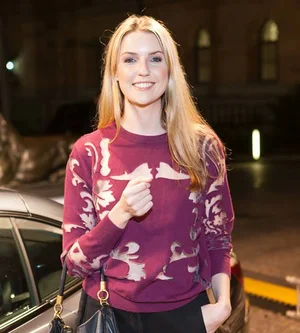
Why do some launches convert and others flop, and why is it almost never the offer? Erin Morris is the founder of Launch With Erin, a messaging and launch strategist and conversion copywriter who helps coaches two-to-three-times their revenue through strategic launch funnels. In this episode she breaks down what a launch actually is, why your own voice is now your biggest competitive advantage in a sea of AI-generated sameness, and how a former paramedic turned digital nomad reverse-engineered a business from the life she wanted.
Why does your copy sound like everyone else's?
Because everyone's using the same robot. Erin uses AI daily for brainstorming and dissecting transcripts, but never for first drafts: "As soon as I try to use it for something creative, it zaps my creativity." Her bigger point is strategic: with feeds full of identical AI-generated marketing, sounding like a human is now a competitive advantage. "Anything that you say conversationally is so much stronger than some AI marketing blah blah blah." Her tip for finding your voice: re-watch recordings of your own calls, because you're dropping copy gold every time you speak.
What actually is a launch?
If you have a course, group program, membership or mastermind, a launch is the strategic process of taking it to market: the messaging levers that get people to sign up for your webinar, show up live, and ultimately convert, plus the post-launch analysis almost nobody does properly. Erin's reality check on expectations: clients tell her they did terribly, then she looks at the funnel and finds a 3% conversion rate, which is genuinely good. Launches aren't magic, and they don't have to be stressful if you give yourself enough runway: "They follow a very heavily studied buyer psychology journey. Once you learn it, you can't not succeed."
Is a failed launch really a failure?
Erin starts every project with data, because "if you're popping something in a GPS as to where you want to go, you can't get there without your start point." And her most unpopular truth: "If you have a failed launch, it's probably not the offer, it's your messaging." Optimising from a launch that flopped beats starting from scratch every time. She's also honest about the comparison trap that nearly derailed her: an Instagram feed full of "10K months" convinced her she was failing, even as she hit her own first 10K. Define your own numbers, then improve on them.
How do you build a business around the life you want?
Erin was a paramedic with, in her words, zero remote transferable skills, and a decade-long habit of full-time travel. When COVID grounded her travel blog, she taught herself online skills, started a virtual assistant business, discovered the online female entrepreneur world existed, and kept saying yes until she landed on launch copywriting, where she watched clients make their entire previous year's salary in a 10-day launch. Her advice to anyone starting out is to run the same process she did: "Start at the end, with your goal or your vision of your life, and reverse engineer what will get you there." Don't build yourself a job; build yourself a life.
Erin's one piece of advice for women in business
"If you want different results, you have to do something different." Cliché? She thought so too, until she actually audited herself recently and realised she was repeating the same patterns with tiny variations. The advice isn't the saying, it's the sit-down: ask honestly whether you're genuinely doing anything different, because different results never come from a slightly rearranged version of the same thing.
Meet Erin Morris, Founder of Launch With Erin
Erin Morris is a messaging and launch strategist and conversion copywriter who helps coaches fill their group programs and scale through strategic launch funnels, from pre-launch runway to post-launch analysis. A former paramedic and lifelong digital nomad, she's now channelling everything she's learned into a high-touch, six-month launch mentorship taking founders from one-to-one businesses to scalable group offers.
You can find her here:
Full transcript
Danielle: So good! Erin, welcome to Spark TV!
Erin: Hi, thank you!
Danielle: I'm so excited to get you on the podcast, because we've had short, high-level chats over the last couple of months, and I'm so keen to dive deeper into your story and share it with the Spark community. So thank you so much for being here.
Erin: Yes, thank you for having me, Danielle.
Danielle: So fun. Let's start out by telling everyone who you are and what you do.
Erin: Amazing, yeah. So my name is Erin, and I am the founder of Launch With Erin. I am a messaging and launch strategist and conversion copywriter, and I help coaches two-to-three-times their revenue through strategic launch funnels, so they can fill their group programs and scale their business.
Danielle: Oh my god, you have that pitch nailed. You know, because you're a words person?
Erin: That's it, that's it.
Danielle: Isn't it wild, though? I feel like so many of us business owners actually struggle with the words. We all start these businesses because we have expertise in something, or we're really passionate about solving a problem, but when it comes to explaining what it is we do, and who we serve, we get really wishy-washy. But I guess that's the whole point of being a launch strategist, right? Get to the point, get the words out, get people buying what you're selling.
Erin: Yeah, absolutely. And I think also, because my clients are mostly coaches, they are the verbal people. They communicate through their voice, their ideas, getting them out, and then they come to write them, and all of a sudden they've got nothing. It really is true that you can be too close to your business. So many of my clients will be like, oh my gosh, I've been trying to think of how to say that for weeks, if not months now, and you've just nailed it in a second.
Danielle: And when we're solo operators, sometimes just talking to someone gets it out of your head. Having someone like you to sit down with and interpret what it is we think we're doing.
Erin: Oh, yes, absolutely. One of the biggest things I say to clients: we'll be on a strategy call, and they're reeling off all of these amazing things about their business, who they help, the problems they solve, but then they go to write it, and they have nothing. So my piece of feedback is always, and all of the listeners can do this as well: re-watch the conversations that you're having and the recordings of these calls, because you are dropping all of these nuggets via your words. Now you just have to pull them out and take them as pieces of copy.
Danielle: Yeah, totally. And all these bloody recordings transcribe now, you can't get away from things being recorded and transcribed, or an AI bot attending your meeting these days.
Erin: Yeah. And in terms of AI, what makes you stand out now is having an authentic message. All that carefully crafted marketing slang and lingo, we're all just so sick of it and caught onto it, and it doesn't sound good. Those headlines, like "the most powerful, ultimate this and that", no one wants that. Anything that you say conversationally, I always say, is so much stronger than some AI marketing blah blah blah.
Danielle: Yeah, it's really wild. So let's just dive in here while we're on this tangent. What is your stance? Because I feel the same way. I love it, I'm not gonna lie, I use it every day. But mostly for brainstorming, for getting myself out of my head, for almost being that person to talk to when you don't have anyone to talk to. But the stuff it spits out, you've got to be so careful. Some of it's not factually correct, some of it's boring as batshit, and when you're on social media these days, all of the posts are exactly the same. And people are talking about conversion rates being lower, opt-ins being lower, people not attending webinars. I can understand that when it's all a sea of the same. And I kind of feel like AI's to blame.
Erin: Yeah, I think it's to blame as well, but it also shows that it's a really good thing for the business owners that aren't going to use it, because it gives them that automatic step up. If you're going to invest time into your voice, your messaging, your copy, and not be this AI jargon that everyone else is using, that instantly makes you stand out better than anyone else. For me, I also use AI every day, but that's more brainstorming, dissecting transcripts, anything like that. As soon as I try to use it for something creative, it zaps my creativity. I have nothing, and then I can't get back on track. So my stance now is I always do any first drafts, any ideas, out first, using my own ideas. I compare it to social media: when you're scrolling for inspiration, and you've got no inspiration, you just feel worse about yourself. That's how I think AI works as well, you let it zap anything original from you. So my recommendation is always to do your own first drafts, and then let AI boost it and help you from there.
Danielle: Yeah, I totally agree. And I love that you said, firstly, being conversational, because that's how people want to feel, right? When they're reading your copy or your social posts, they actually want to feel like you are talking to them, the individual whose problem you're supposed to be solving. And I love that you said the best way to stand out now is to use your own voice, not AI's voice.
Erin: Yeah, just being yourself. Wild! It's so much harder, right?
Danielle: I know! But then we're totally triggered, because I'm like, oh, I don't want to put myself out there.
Erin: And you don't realise either, because you're just so swayed by all of the influence online, all of the people around you. I know for myself, and this is something I've overcome over the years, being so many different people's voices, I really lost my own voice for a long time. I had to really step back and be like, well, who even am I? How do I sound? Who am I when I'm not everybody else? You get so caught up, especially when you're looking up to people in your industry and competitors, and they're making more money than you, so you want to sound like them to make more money. But then you end up sounding like a diluted version of them, the lesser them. It really is hard. You just have to tune out all of the noise and just be you.
Danielle: Totally. And it's really interesting, we were on our virtual vino for the Sparkies yesterday, and this came up, we were ranting about dodgy marketing practices. But I feel like it's the same thing: when you're showing up as yourself online, you attract the right people. That's one of the things I love about Spark. I don't know how it's happened, I think because it's just me being the chaotic mess that I am, it attracts awesome people, and we're all similar stages, similar ages, similar values. And I just think that is the power of using your own voice and really leaning into who you are, because otherwise you attract people that are almost meant for somebody else, and they don't have great experiences, you get more refunds and all those things. So even though it's scary, it's so valuable to show up as authentically as you can.
Erin: Yeah, that's a really good way of putting it. It's another benefit, because you get those dream clients that you're just obsessed with being around every day, and it doesn't feel like work. When you are someone else, you're not attracting aligned people, because you're also not being your most authentic self.
Danielle: Or a robot. Oh, I love it so much. So how did you even get into this? How did you become a launch strategist?
Erin: So, I have followed many pivots over the years. I have been a digital nomad, a full-time traveller, my entire adult life. I also studied to be a paramedic during this time, so I had my big girl job for about 15 months, realised it didn't give me enough time for travel, and I was gonna quit and travel for a couple of years.
Danielle: Yeah, big girl jobs suck.
Erin: I was like, I don't know about this one. I'll come back to it when I'm older. It's been over 10 years now. So during my travels, I started a travel blog. That was my little dip into the online world and online marketing, back in about 2017. I did that for 3 years, up until COVID hit, and then, as we know, there wasn't any travel. I was like, okay, now what do I want to do? So I started a virtual assistant business, and that showed me the online female entrepreneurial world, which I genuinely did not even know existed. Just by saying yes to opportunities, I quickly realised that with my blogging background, I loved writing, and copywriting was even better than blogging. I just kept pivoting and pivoting and following guesses until I got into launch copywriting, which I was obsessed with. Because as much as my values are travel and freedom, I couldn't believe that people were making, and I got to help these people make, their entire previous year's salary over a 10-day launch period. And as much as my clients value time freedom, location freedom, lifestyle freedom, you can't have that without financial freedom. So it all sort of circled back, and I got really obsessed with launches. Again, just keep saying yes, keep pivoting, or expanding, I should say. Now I really love the strategy side of it, the data side. I don't just do the copywriting. I'm leaning heavily into the full launch funnel now, helping my clients go from pre-launch all the way through to post-launch, so they can two-to-three-times their revenue with one signature program. They don't need to keep creating more offers, they don't need to grow their audience. Let's make this one program what you're known for.
Danielle: That is so cool. I love that, because I think people think they've got to keep adding and adding and adding, when really, if you can just focus on one thing, and make it incredible, and nail that funnel, and nail that launch, and do it over and over and get better and better, that's so much more valuable than diluting your message into all of these different products. But for anyone listening who doesn't know, what actually is a launch? What is that whole thing about?
Erin: Yeah. So specifically with my clients, a launch will be when you have an online course, a group coaching program, a mentorship, membership, mastermind, it could even be a one-to-one program, but I specialise in group offers, and you've said, okay, now I have this program of all of my specialties, I'm going to launch it to my audience. A big thing about launches is that most successful one-to-one businesses have been built through referrals, word of mouth, some SEO, maybe some random social media. But they don't know the messaging levers that need to be pulled to confidently convert. So: what do you actually need to say to get people to sign up for your webinar? What do you need to say to get people to show up live to that webinar? And then, ultimately, what do you need to say to convert? That is the launch process. And then afterwards, you've got the post-launch, which is a part people really aren't doing well enough, I would say. A lot of it goes into emotion, being like, oh my god, I did terrible. But then I'll look at their funnel and go, well, you actually converted at 3%, which is really good. There are a lot of unrealistic expectations, especially when you have a smaller audience, or you're just getting started.
Danielle: Yeah. And there's so much noise online about "I made a billion dollars in 17 seconds on my webinar, or launch, or course". So you hold yourself to other people's standards. I love that you look at the data, to say, no, this is actually industry standard, this is where you're at, now we improve, or we get a bigger audience. It can be so disheartening when you're looking at other people online and the things they're saying, which may or may not be true, and comparing yourself.
Erin: Yes. Data is honestly one of the biggest things, and I start all of my projects looking at data and metrics. Because if you're popping something in a GPS as to where you want to go, you can't get there without having your start point. So: start with the numbers, end with the numbers. And another thing is, people aren't overnight successes. Even if they look like an overnight success, they probably aren't. Even if it's a new business, they're probably a serial entrepreneur or something. It's the best way to learn, and I know people hate me saying this, but if you have a failed launch, it's probably not the offer, it's your messaging. You just need to look at the numbers and keep going, because it's going to be better to improve and optimise from a failed launch than to constantly be starting from scratch.
Danielle: Yeah, that's so interesting. Actually having that "this is where we're at", and knowing what to change, what to add in, is so much more valuable and has such a better outcome than starting from scratch and building a new product. I was listening to a podcast the other day, someone who I think of as super successful, sharing that the first thing they put out, 9 people listened to it, and I'm pretty sure their mum was one of them. It's so easy to forget that we all have to start from zero. We all have to start from a failed launch, or something that wasn't as successful as we thought it would be. Nobody comes into this all guns blazing, viral, millions of dollars. We all actually have to start at learning how it's done.
Erin: Exactly, exactly. And I love those stories. I'm kind of addicted to people's origin stories, and how long it took them to be successful. I'm like, oh, I feel much better about myself now. But I even find, all of the people that are so successful, or the ones that have started a new business and are like, I made my first six figures in 90 days or whatever it is, I hate these stories, but also, I look into their actual backgrounds, and they've had, like, 5 businesses. So it's not 90 days. When I first started my business, I was stuck in that comparison. The 10K months was my thing on Instagram. I think I tricked the algorithm into only showing me everyone making 10K months, and 10K US. So there I was, a brand new business owner, going, I'm not making 10K months, I'm terrible, I'm bad at business, I'm so unsuccessful. And then I remember I made my first 10K Australian dollars, and I still was like, I'm unsuccessful. I couldn't even see my own success, because I compared myself so much on Instagram to these revenue markers that, who knows if they were even true or not. That was one of my biggest mistakes in business.
Danielle: Yeah, but it is such an interesting point. I don't think people talk about the fact that you have to define your own version of success. Well, you can pick other people's versions of success if you want, but what tends to happen is you're chasing this elusive thing that may or may not be real, and then you get there and realise it doesn't make you happy, and you have to go through the whole process of figuring out that you do have to define what success looks like for you, what kind of life you want to live, and what kind of business you want to create.
Erin: Yeah, absolutely. One of the things I've been working on this year: I have a vision board as my laptop background, and all year I have been pulling pieces off it, going, actually, I don't think that's what I want. I think that was influenced by someone else, society, Instagram, whatever it was. It's taken me a whole year of being like, oh, wait, no. Very intentional work, and still not even realising that these things aren't my own desires, which is crazy.
Danielle: It's so funny, I literally have my vision board in front of me. But I was listening to this manifestation thing, Denise Duffield-Thomas is running a five-day series on manifestation, and yesterday was all about being specific. And even as she was saying the words "be specific", I was going through all of these versions of goals I have in my mind, and I was like, you don't even know what you're going for! How can you be specific and put it out there if you don't even know what it is? So I think it's very interesting that you've gone through that process of, okay, this is what I want, then refining it, taking the time to figure out what is and isn't important to you. We do really get swept up in all the things that people have, and the shoulds. What should our life look like? So I think it's so important to sit down and be intentional. And we were talking about that on our vino yesterday too, about getting clarity.
Erin: Oh, it's interesting that we landed here. Yes.
Danielle: Because I think it does take time. And that was one of the things we were talking about yesterday: how you go about getting clarity. I think it's actually really difficult as a business owner sometimes, because we are so trapped in our to-do lists, trapped in the shoulds, trapped in the need-to-pay-rent-this-month, whatever it is we're going through in that moment. So I'd love to talk to you about that. How do you go about getting clarity in your business? How have you gotten to the point where you're looking at the vision board and going, that's not really for me?
Erin: Yeah, it's hard. I truly think, with everything around us, Instagram, it's: how do you tune out that noise? For me, being in nature is really helpful. Going on a walk. I'm such a big mountains hiker, in the big trees, which unfortunately in Australia I don't really have, but as soon as I'm out in nature, I feel like I have all of the ideas. I can definitely get that on a normal walk too, just not as in-depth. If I go for a walk, even with music on, it doesn't have to be completely quiet, even podcasts, weirdly enough, my brain goes, okay, let's figure these things out. But a big thing for me, I've realised, is I just have to tune out social media. I really don't scroll at all, and as soon as I do, I think I want things that aren't mine.
Danielle: Yeah. And it's so interesting that that's what works for you. It plays so much into your life choices, to be a digital nomad and travel the world. How did you figure out that digital nomad life was for you?
Erin: So, I was a full-time traveller before I had a remote job. I really just loved travelling, but I would always pick up backpacker jobs or jobs overseas, always starting at the bottom. And this was 2020, so I'm like, okay, great, I have to stay still. I want a job that pays me while I travel. Having been a paramedic, I had zero remote transferable skills. So if I wanted to work online, I had to teach myself the skills. Like I said, I didn't know about the female entrepreneurial world, I didn't know what was out there, what my options were, so I really just dove in, followed interests and passions, and just kept saying yes. But the more I started working online, the more my reason, my why, changed. I'm so passionate about the people I work with, and I very much take other people's energy as my own energy. So working with passionate women and impact-driven brands was a high that I never got before. As soon as I'd get off a strategy call with someone that was so passionate, I could write their sales page in no time.
Danielle: Yeah, channel their voice.
Erin: Yeah, absolutely. So mine's just been diving in, following pivots, and not doing a lot of thinking. Just going.
Danielle: I just love that, though, because I think oftentimes people start businesses based on their skill, not on the life they want to live. And you've done it the opposite: actually, this is what I want my life to look like, how do I learn and dive in and explore different paths to get me there? I just think that's so cool.
Erin: Yeah. I actually was having a conversation with a friend this morning who wants to start an online business, or make money online, and I gave him that exact piece of feedback. I was like, well, where do you want to go? Do you even want a remote job? You should start at the end, at your goal, your vision of your life, and reverse engineer what will get you there.
Danielle: Oh, I love that, it's just such great advice. I find a lot of women create jobs for themselves. It's almost like they didn't like the job they were working in, but that was their skill, so they end up building a business that's basically the job they had, but now with all the overheads of a business. So I love that you've reversed it: let's think about what we want life to look like, and I will create a business around that. And in the process, you've found your passion, you've found your people. I think it's incredible.
Erin: Yeah, it's been amazing. I'm just so grateful that I have been that person to myself, and led myself to this spot, because I would never change any of it.
Danielle: Yeah. And also amazing that it's not linear. I love that you share that you've experimented, tried different things, tried different models, learned, had no idea about this world and just dove straight in, and that's what's led you to find what you're excited and passionate about. I think people try and wait until they know exactly what to do, and I don't think that ever happens. I've been in business for 15 years, and I still don't fucking know what I'm doing.
Erin: Yep, I definitely feel that.
Danielle: Oh, so good. So what's next for you? What does 2026 hold?
Erin: Yeah, so I have been building a mentorship program. The gap that I saw as a copywriter was that people would hire me in the hopes that it would solve all of their launch problems: "I have now invested in copywriting, so I will magically have a six-figure offer." But they didn't know how to look at the data, they didn't have the messaging angles. And this is a really big thing: even when I'm working with clients, I can still only build copy from what they tell me. So now I add a lot more strategy and messaging to my copywriting projects, because I help them uncover what their audience actually needs to hear. And this is what AI cannot do either: you can tell it to write an email, but if you don't know what the email needs to say, it's not going to convert. So my mentorship is going to be a high-touch, 6-month program where I really take people from pre-launch all the way to post-launch. We go through every single thing, they get all of the copywriting templates with my reviews, high-touch support. I think accountability is such a big thing as well, because I know so many people invest in courses and don't finish them. Here, they don't have a choice, they have to go through it, because it's going to be a small group, high touch. It's implementation. I'm really excited, because I know there is such a gap in the market, and it'll really help people have these high-converting launches and move from their one-to-one businesses into scalable group offers.
Danielle: Oh my god, that is incredible, and I can just imagine the women listening right now going, what? I want a high-converting launch, I want a scalable group offer! There are so many people that I have conversations with who are trying everything and just not quite getting there, and I just know, when they have someone objective like you, who has seen so many different people's data, seen what works and what doesn't, and can be that objective person for them, how much impact that makes on a woman in business, her ability to create bigger revenue, more profit, and live the life that she wants. So I'm so excited that we got to share that.
Erin: Yeah. And a big thing as well is that launches get this really scary, overwhelming, stressful name. But I want to assure people that launches aren't like that. If you do them right, if you give yourself enough pre-launch runway so that you're not working crazy hours just to get everything done, they're not magic. They follow a very strategic, very heavily studied buyer psychology journey that's full of conversion tactics. Once you learn it, you can't not succeed. That's why I love launches, and I love my job, because I get to combine creativity and analytical. I get the best of both worlds. I really am just obsessed with it, and the people I work with, everything.
Danielle: Oh, I love that so much. You are amazing, Erin. Now, I always love to wrap up these podcasts with one last piece of advice. So, reflecting on your time in business, what would be a piece of advice that you would give to another woman on her business journey?
Erin: Yeah. So, I've been thinking about this one a lot lately, and it's: if you want different results, you have to do something different. And I know it's so cliché, and I have heard this saying a million times over the years, right? Yeah, cool, different results, different things. But I've never really sat down and been like, am I doing something different? Until recently. And I'm like, no. I'm kind of repeating the same patterns, even if it's slightly different. So this has been a really big thing in my mind over the last few weeks, and I really am actively trying to do something different to get different results.
Danielle: Oh my god, I love that so much. You are so spot on. Anyone listening is probably going, oh yeah… it's a little triggering. I was literally just thinking about that in relation to the SPARK grant period we've got going on right now. I started with a goal, and I'm like, have you actually done anything differently this time around? So that's incredible advice for anyone listening. Thank you so much, Erin. You are amazing!
Erin: Thank you for having me, Danielle.